
We also offer
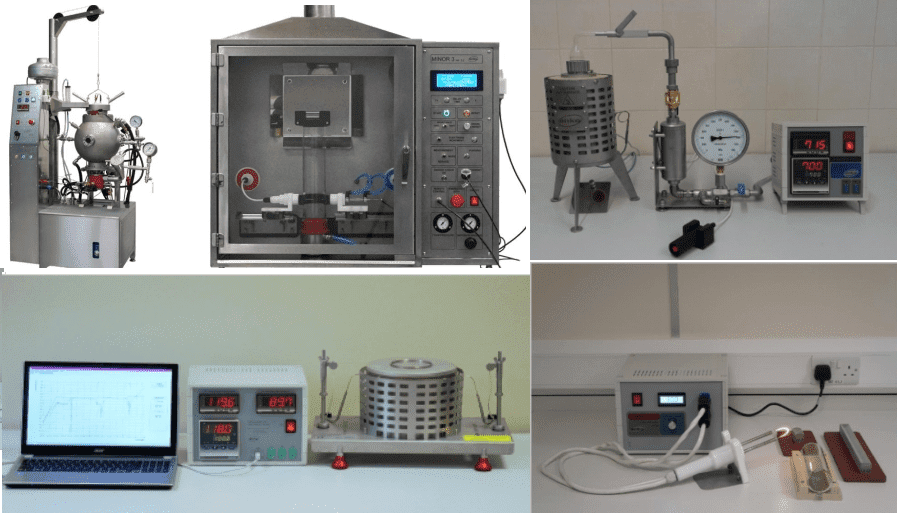
Prime Process Safety Center provide comprehensive testing to determine the explosibility and flammability of dusts. Our lab services support industries such as manufacturing, food processing, pharmaceuticals, and mining, helping identify materials that pose serious fire and explosion hazards.
By understanding the ignition risks, facilities can implement effective safety measures such as dust control, proper ventilation, ignition source management, and explosion protection systems. Testing also provides actionable data on dust properties such as Minimum Ignition Energy (MIE), Minimum Explosible Concentration (MEC), and Minimum Autoignition Temperature (MAIT), clients can make informed decisions on process safety, equipment design, and compliance with OSHA and NFPA regulations.
With state-of-the-art equipment and experienced personnel, Prime Process Safety Center delivers accurate and defensible results. Our team provides complimentary recommendations to enhance safety across your facility and ensure adherence to industry standards. Contact our combustible dust testing lab today to schedule testing or request a quote.
Applying Recognized Test Methods to Facility Operations
Safety Data Sheets provide broad averages, but conditions inside your plant change how materials behave. Particle attrition inside mechanical conveyors creates fine, reactive fractions over time. Our combustible dust testing laboratory checks your process samples against standard protocols, so the results reflect what’s really happening in your facility.
Each evaluation follows established industry standards, including:
- ASTM E1226: Measures deflagration parameters inside specialized pressure vessels to determine explosion severity indexes.
- ASTM E2019 and IEC 60079-20-2: Identify minimum spark levels that cause ignition under static discharge conditions.
- ASTM E1515: Establishes concentration thresholds necessary to sustain a propagating flame front.
- ASTM E1491 and ASTM E2024: Define thermal ignition limits for suspended particulate clouds and settled layer accumulations.
Accounting for Interconnected Hazards
Solids-handling hazards rarely exist in total isolation. Powder transfers through ductwork or flexible containers continuously generate electrostatic charges across non-conductive surfaces. If that built-up static discharges near a dust cloud, it can ignite instantly. At Prime Process Safety Center, our combustible dust testing laboratory looks at how these risks feed into each other.
Our experienced process safety consultant pairs thermal sensitivity analyses with powder resistivity values. Bulk storage vessels like silos and hoppers frequently retain ambient heat, initiating low-temperature smoldering that standard tests might miss. Quantifying these interrelated reactions protects processing equipment from unpredicted secondary flash fires. When you ship samples directly to our dedicated combustible dust testing laboratory, our team delivers clear engineering figures tailored strictly to your actual working setup.
Turn raw numbers into operational defense. Contact our team to review sample shipment guidelines and schedule your material evaluations.

FAQs
Why should a plant avoid relying on generic literature data for hazard evaluations?
Published values come from someone else’s samples, tested under someone else’s conditions. Your on-site manufacturing operations generate distinct particle shapes and moisture levels through mechanical milling and conveying. A hazard analysis built on those numbers may underestimate your real risk, and it’s harder to defend during an audit.
How does electrostatic accumulation increase ignition risks during powder transfers?
Powder movement through pipes creates friction that builds electrical voltage. If the material has a low minimum ignition energy (MIE), even a small static spark can ignite a dust cloud.
What specific sample volume does the laboratory require for standard test suites?
Most standard test protocols require one to two kilograms of dry sample material.
When should our facility schedule re-testing for ongoing processes?
Any modification to raw material vendors or plant ventilation requires immediate re-evaluation. Minor recipe changes can alter particle size, which shifts explosion-risk parameters.
Does a positive screening result automatically demand full explosion severity characterization?
Yes. Initial screening confirms whether a particulate cloud ignites when exposed to an energetic source. If the test shows positive combustibility, engineering teams need full severity testing to design relief panels and isolation barriers correctly.