


Table of Contents
- What Is Thermal Stability Testing?
- Why Thermal Stability Data Matters
- Four Questions a Thermal Stability Program Should Answer
- Selecting the Right Test: A Tiered Strategy
- Core Calorimetry Methods
- Specialized Thermal Stability Tests for Powders and Bulk Solids
- Self-Accelerating Decomposition Temperature (SADT) and SAPT
- From Data to a Cooling-Failure Scenario
- When Should Thermal Stability Testing Be Conducted?
- What Materials Can Be Evaluated?
- What a High-Quality Test Report Should Provide
- Turning Results into Practical Safeguards
- Industries That Commonly Use Thermal Stability Testing
- Why Work with an Independent Thermal Stability Laboratory?
- Frequently Asked Questions About Thermal Stability Testing
- Plan the Right Thermal Stability Study
REACTIVE CHEMICAL SAFETY: Thermal Stability Testing

Turn decomposition data into safer processing, storage, and transportation decisions.
Calorimetry helps reveal when materials begin to release heat—and how quickly conditions can escalate. Source: Prime Process Safety Center
Executive takeaway
A material may appear stable at room temperature yet become hazardous when heated, confined, contaminated, dried, stored in bulk, or held for an extended period. Thermal stability testing identifies these conditions before they develop into fires, pressure events, runaway reactions, product loss, or transportation incidents.
What Is Thermal Stability Testing?
Thermal stability testing is a structured laboratory evaluation of how a substance, formulation, reaction mixture, waste stream, or solid product behaves as temperature and time change. The objective is not merely to obtain an “onset temperature.” A sound study determines whether heat is released, how much energy is available, how quickly heat and pressure can develop, whether gas is generated, whether the behavior is autocatalytic, and how laboratory observations translate to the actual process or package.
At Prime Process Safety Center, thermal stability studies are integrated with process knowledge so the data can support practical decisions about operating limits, cooling capacity, storage duration, package selection, emergency response, and relief protection. Explore our broader Reactive Chemical Testing Services.
Why Thermal Stability Data Matters
Exothermic decomposition can be deceptively slow at first. As a material self-heats, the reaction rate often increases with temperature. If the heat generated exceeds the heat removed to the surroundings, the material can enter a self-accelerating condition. Larger vessels and packages generally dissipate heat less effectively than small laboratory samples, which is why scale and geometry are central to interpretation.
- Prevent thermal runaway during reaction, drying, distillation, concentration, milling, blending, and other heat-generating operations.
- Establish defensible maximum operating and storage temperatures with appropriate safety margins.
- Evaluate the effect of loss of cooling, loss of agitation, dosing errors, extended hold times, contamination, and incompatible contact.
- Determine whether decomposition generates noncondensable gas or vapor pressure that could overpressure equipment or packages.
- Support UN/DOT transportation evaluation, including Self-Accelerating Decomposition Temperature (SADT) or Self-Accelerating Polymerization Temperature (SAPT), where applicable.
- Provide inputs for reaction hazard assessment, emergency relief design, safe scale-up, management of change, and incident investigation.
Important interpretation point
Instrument onset temperature depends on the method, sample, heating rate, containment, atmosphere, and sensitivity. It is not a universal safe operating temperature. Interpret it for the intended scale, exposure time, and heat-transfer conditions.
Four Questions a Thermal Stability Program Should Answer
1. How much energy can be released?
The heat of decomposition or reaction indicates the magnitude of the thermal event. Energy release must be viewed together with reaction rate, mass, confinement, and heat-removal capacity.
2. How hot could the system become?
The adiabatic temperature rise estimates the potential temperature increase when heat loss is negligible. It helps define worst-case temperature, secondary decomposition potential, boiling, and material-of-construction concerns.
3. How quickly can conditions escalate?
Self-heat rate, pressure-rise rate, time to maximum rate (TMR), and related kinetic parameters reveal the available response time and whether existing alarms, cooling, quench, or venting can act quickly enough.
4. What scenario is truly credible?
Data from desired and undesired reactions should be combined with process conditions to evaluate cooling failure, feed accumulation, contamination, incorrect charging, prolonged holding, and other deviations. Autocatalytic reactions require particular care because their products can accelerate further decomposition.
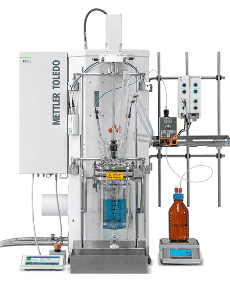
Reaction calorimetry can reproduce dosing, agitation, reflux, and temperature control while measuring heat generation. Source: Prime Process Safety Center

Selecting the Right Test: A Tiered Strategy
No single instrument answers every thermal safety question. A cost-effective program usually begins with screening, then progresses to simulation or adiabatic testing when the screening result or process consequence justifies more detail.
| Test | Primary purpose | Typical outputs | Best used for |
|---|---|---|---|
| DSC / DTA | Rapid thermal screening | Exotherm/endotherm onset, peak, heat release | Raw materials, mixtures, intermediates, early development |
| TGA | Mass-loss behavior | Mass change vs. temperature/time | Volatilization, drying, oxidation, decomposition |
| ARC | Adiabatic runaway characterization | Self-heat and pressure rates, TMR, kinetics | Detailed decomposition and storage safety |
| Reaction calorimetry | Desired-reaction heat balance | Heat flow, accumulation, MTSR, cooling demand | Batch and semi-batch process development |
| VSP / low-phi | Runaway and relief data | Temperature/pressure rates, gas generation, venting behavior | Emergency relief design and severe runaway scenarios |
| Bulk/air-over-layer/aerated/basket | Self-heating in realistic solid configurations | Ignition behavior, onset vs. scale/geometry | Dryers, hoppers, silos, drums, bags, bulk storage |
| SADT / SAPT package tests | Transport and storage stability | Critical package temperature behavior | Self-reactive substances and polymerizing materials |
Table 1. Typical roles of thermal stability and reaction hazard test methods.
Core Calorimetry Methods
Differential Scanning Calorimetry (DSC)
DSC is a small-scale screening technique that measures the difference in heat flow between a sample and a reference during a programmed temperature scan or isothermal hold. It can identify exothermic decomposition, melting, curing, oxidation, crystallization, or other transitions. Typical outputs include apparent onset and peak temperatures and heat release per unit mass. Because a DSC sample is small and the scan may be much faster than plant heating or storage, the result is a screening signal—not a direct full-scale safe limit. Learn more about Differential Scanning Calorimetry.
Thermogravimetric Analysis (TGA)
TGA measures sample mass as a function of temperature or time. It can distinguish evaporation or drying from chemical decomposition, reveal multi-stage mass loss, and assess oxidation behavior under selected atmospheres. TGA is particularly useful when DSC shows an event and the team needs to know whether the event coincides with volatile release or decomposition. See the role of Thermogravimetric Analysis in reactive chemical testing.
Accelerating Rate Calorimetry (ARC)
ARC uses heat-wait-search or isothermal methods to detect low rates of self-heating and then follow the sample under near-adiabatic conditions. Temperature and pressure are measured as the event develops. The data can support calculation of self-heat rate, pressure-rise rate, adiabatic temperature rise, TMR, kinetic parameters, and—in the right study design—SADT estimates. The calorimeter’s thermal inertia, represented by the phi factor, must be considered when translating the measured rates to a plant-scale system. Explore Accelerating Rate Calorimetry (ARC).
Accelerating Rate Calorimetry equipment used to characterize self-heating and runaway behavior. Source: Prime Process Safety Center
Reaction Calorimetry (RC)
Reaction calorimetry measures the heat generated during the intended process under controlled, stirred conditions. It can reproduce reactant addition, reflux, distillation, agitation, and temperature profiles. The study can quantify heat of reaction, heat-release rate, feed accumulation, cooling demand, and Maximum Temperature of the Synthesis Reaction (MTSR). When combined with decomposition data, it helps determine whether a cooling failure can drive the batch into a secondary decomposition region. Learn how Reaction Calorimetry supports safer scale-up.
Vent Sizing Package (VSP)
A low-phi VSP test provides adiabatic temperature and pressure data with relatively low test-cell thermal inertia. Depending on the configuration, it can measure gas generation, tempering, two-phase flow behavior, and other inputs needed for reactive emergency relief design. VSP testing is often selected when the consequence of a runaway includes rapid pressure rise or when a relief device must be sized or validated. Review Vent Sizing Package testing and related relief-system applications.
Example thermal data visualization used to interpret onset, acceleration, and maximum-rate behavior. Source: Prime Process Safety Center
Specialized Thermal Stability Tests for Powders and Bulk Solids
Small-scale calorimetry is valuable, but powders and bulk solids may self-heat in ways controlled by airflow, bed depth, oxygen access, and heat transfer. Tests that simulate the actual physical arrangement are often needed for dryers, filters, hoppers, silos, drums, bags, and intermediate bulk containers.
Powder Layer Screening Test (Air-Over-Layer Test)
A shallow powder layer is exposed to heated airflow to simulate tray, band, and cross-flow drying. The test identifies whether the material smolders, chars, ignites, or shows sustained exothermic behavior under the selected conditions. It is useful when dust deposits may remain on hot dryer surfaces or when a product layer is continuously exposed to warm air.
Bulk Solid Screening Test
The material is evaluated in a bulk configuration that better represents accumulations in dryers, hoppers, silos, drums, bags, or downstream equipment. Because heat loss decreases as the bulk size increases, this test can reveal hazards that are not apparent in a thin layer.
Aerated Solid Screening Test
Heated air passes through the powder bed, simulating fluidized-bed or circulating-band dryers and other operations where air penetrates the material. Aeration can increase oxygen supply and alter heat transfer, so the result may differ significantly from a static bulk test.
Isothermal Basket Test
A sample held in a wire basket is exposed to a constant oven temperature, and its core temperature is monitored. Tests at more than one basket size can support scale-up models that estimate critical conditions for larger packages, vessels, or storage geometries. The outcome can be used to develop a maximum safe operating or storage temperature with an appropriate engineering margin. For broader evaluation of solid-material self-heating, visit Self-Heating Evaluation and Analysis.
Self-Accelerating Decomposition Temperature (SADT) and SAPT
SADT is the lowest ambient temperature at which self-accelerating decomposition may occur in a substance as packaged for transport. It is a property of the substance-package system—not merely of the chemical. Package size, geometry, fill, insulation, and heat transfer all influence the result. SAPT applies similar principles to polymerizing substances where uncontrolled polymerization is the concern.
UN test methods commonly used for SADT evaluation include the H.1 United States SADT test, H.2 adiabatic storage test, H.3 isothermal storage test, and H.4 heat accumulation storage test. The selected method should match the material, packaging, available data, and regulatory objective. Screening or kinetic methods may guide the program, while full-package testing may be required for certain classifications or borderline cases.
SADT is package-specific
Changing from a small bottle to a drum, tote, or insulated package can change heat-loss behavior and therefore the critical temperature. A test report should clearly identify the package assumptions and the limits of extrapolation.
From Data to a Cooling-Failure Scenario
A robust chemical reaction hazard assessment combines desired-reaction data with decomposition data. Consider a semi-batch reaction in which cooling fails while reagent addition continues. Reaction calorimetry can quantify the accumulated reagent and calculate MTSR. DSC or ARC can identify the onset and severity of secondary decomposition. If MTSR reaches or exceeds the decomposition region, the scenario may progress from loss of temperature control to gas generation, boiling, rapid pressure rise, or vessel rupture.
- Define normal operating temperature, maximum credible initial temperature, addition rate, concentration, agitation, and cooling capacity.
- Quantify desired-reaction heat, heat-release rate, accumulation, and MTSR.
- Characterize decomposition onset, heat release, self-heat rate, pressure generation, and autocatalytic behavior.
- Compare the process temperature trajectory with decomposition and boiling limits.
- Evaluate response time, alarms, interlocks, emergency cooling, quench, inhibition, dump systems, containment, and relief protection.
- Document assumptions, safety margins, residual uncertainties, and actions required before scale-up or continued operation.
Prime Process Safety Center can integrate laboratory results into a Chemical Reaction Hazard Assessment and, where necessary, support Emergency Relief System Design.
When Should Thermal Stability Testing Be Conducted?
- During research and development, before a new reaction or formulation moves to pilot scale.
- Before scale-up, technology transfer, or a significant increase in batch or package size.
- When changing raw materials, suppliers, catalysts, stabilizers, solvents, concentration, moisture content, or purity.
- When changing operating temperature, dosing sequence, drying conditions, hold time, agitation, cooling, storage duration, or packaging.
- When an impurity, contamination pathway, cleaning chemical, recycle stream, or incompatible contact is credible.
- Before transporting self-reactive, polymerizing, organic peroxide, or otherwise thermally unstable materials.
- After an abnormal temperature excursion, pressure event, discoloration, gas evolution, odor, smoke, fire, or near miss.
- When existing data do not represent the actual formulation, process conditions, atmosphere, or scale.
What Materials Can Be Evaluated?
Thermal stability programs can be developed for liquids, solids, slurries, emulsions, pastes, reaction mixtures, intermediates, residues, filter cakes, catalysts, monomers, polymers, organic peroxides, pharmaceuticals, agrochemicals, energetic materials, battery-related materials, food powders, specialty chemicals, and waste streams. The test plan should consider volatility, toxicity, corrosion, oxygen sensitivity, moisture sensitivity, heterogeneity, expected gas generation, and the representativeness of the submitted sample.
What a High-Quality Test Report Should Provide
- Sample identity, preparation, condition, composition, and chain-of-custody information.
- Test apparatus, method, atmosphere, containment, heating program, sample mass, and relevant calibration details.
- Temperature, heat-flow, pressure, mass-loss, and time data appropriate to the method.
- Identified transitions, onset criteria, peak behavior, heat release, self-heat rates, pressure-rise rates, and gas generation, as applicable.
- Discussion of thermal inertia, phi-factor correction, sensitivity limits, reproducibility, and test limitations.
- Engineering interpretation tied to the actual process, storage package, hold time, and credible deviations.
- Recommended follow-up tests and practical risk controls, rather than unexplained numbers alone.
Turning Results into Practical Safeguards
Testing is valuable only when the results improve decisions. Depending on the hazard, risk reduction may include lowering operating or storage temperature; limiting batch or package size; controlling feed rate; verifying cooling capacity; providing redundant temperature measurement; adding high-high temperature trips; improving agitation reliability; preventing contamination; using inhibitors; limiting hold time; controlling oxygen or moisture; providing emergency quench or dump capability; specifying safe drying conditions; improving warehouse temperature control; or designing adequate pressure relief and effluent handling.
Controls should be developed through a structured hazard review. A single administrative temperature limit is rarely sufficient when the credible scenario involves rapid acceleration, gas generation, utility failure, or human error. Layers of protection must be independent, testable, and fast enough for the time available.
For additional background, read Testing to Assess Your Chemical Reaction Hazard and explore our Calorimetric Studies.
Industries That Commonly Use Thermal Stability Testing
- Pharmaceutical and biotechnology manufacturing.
- Specialty, fine, and commodity chemicals.
- Polymers, resins, adhesives, and coatings.
- Agrochemicals and fertilizers.
- Food, feed, and powder processing.
- Battery, energy-storage, and advanced-material manufacturing.
- Waste treatment, recycling, and environmental services.
- Transportation, warehousing, and dangerous-goods packaging.
Why Work with an Independent Thermal Stability Laboratory?
A qualified third-party laboratory provides appropriate equipment, controlled methods, experienced handling of reactive samples, and an independent technical record. More importantly, process safety specialists can connect laboratory results with the actual plant scenario. Prime Process Safety Center offers integrated reactive chemical capabilities spanning screening, adiabatic calorimetry, reaction calorimetry, compatibility review, kinetics, hazard assessment, and relief-system support.
- ISO/IEC 17025:2017 accredited laboratory capabilities.
- Process safety engineers who interpret results in an industrial context.
- A tiered test strategy tailored to the decision you need to make.
- Detailed technical reports with actionable recommendations.
- Support from early development through scale-up, transportation, and ongoing operations.
Review our Chemical Compatibility Studies and Chemical Kinetics Evaluation capabilities for related needs.

Frequently Asked Questions About Thermal Stability Testing
What is thermal stability testing?
It is laboratory testing used to determine whether a material or mixture releases heat, decomposes, polymerizes, oxidizes, or generates pressure as a function of temperature and time. The program may include screening, adiabatic calorimetry, reaction calorimetry, solid self-heating tests, or package-scale testing.
Why is thermal stability testing important?
It identifies conditions that could lead to self-heating, thermal runaway, fire, gas generation, overpressure, or loss of product quality. The results support safe limits and safeguards for processing, drying, storage, and transportation.
What types of materials can be evaluated?
Liquids, powders, solids, slurries, intermediates, reaction mixtures, monomers, polymers, organic peroxides, pharmaceuticals, battery materials, waste streams, and other potentially reactive materials can be assessed, subject to laboratory acceptance and safe-handling review.
What is SADT?
The Self-Accelerating Decomposition Temperature is the lowest ambient temperature at which self-accelerating decomposition may occur in the material as packaged for transport. It depends on both the material and the package.
What is a basket test?
An isothermal basket test monitors the core temperature of a solid sample held at a controlled oven temperature. Multiple basket sizes can be used to assess scale effects and estimate critical temperatures for larger storage geometries.
When should testing be conducted?
Testing is appropriate before scale-up, after formulation or process changes, when selecting storage or transport conditions, when data are missing or unrepresentative, and after abnormal thermal or pressure events.
How does testing support process safety?
It supplies quantitative inputs for safe operating limits, cooling-failure analysis, alarm and trip settings, storage controls, emergency response, hazard reviews, and relief-system design.
Can a DSC onset be used as the maximum safe operating temperature?
Not by itself. DSC onset is method-dependent and usually requires additional interpretation, safety margins, and sometimes adiabatic or isothermal testing to account for time, scale, and heat-transfer conditions.
What happens after testing is completed?
The data should be reviewed against the actual process and credible deviations. The next step may be an engineering assessment, additional testing, revised operating limits, safeguard design, transportation classification, or relief evaluation.
Why use a third-party laboratory?
An independent specialist brings suitable equipment, standardized methods, reactive-material handling experience, traceable documentation, and objective interpretation that can support engineering, regulatory, insurer, and customer needs.
Plan the Right Thermal Stability Study
The best test program starts with the decision you need to make—not with a preferred instrument. Provide the material identity and composition, process description, normal and abnormal temperatures, pressure, atmosphere, batch or package size, heating and cooling conditions, hold time, and the concern you need to resolve. Our team can then recommend a staged study that generates the necessary data without unnecessary testing.
Ready to discuss your material or process?
Contact Prime Process Safety Center at (346) 462-3838 or info@primeprocesssafety.com. We can help define the appropriate test strategy, interpret the results, and translate the data into practical controls for processing, storage, and transportation.
Related Blogs

Basket Self-Heating and Scale-Up Testing
Understand the conditions that lead to gas and vapor explosions, common industrial scenarios, and how facilities can reduce the risk.

How to Prevent Dust Explosions and Meet NFPA 660 Requirements
Understand the conditions that lead to gas and vapor explosions, common industrial scenarios, and how facilities can reduce the risk.
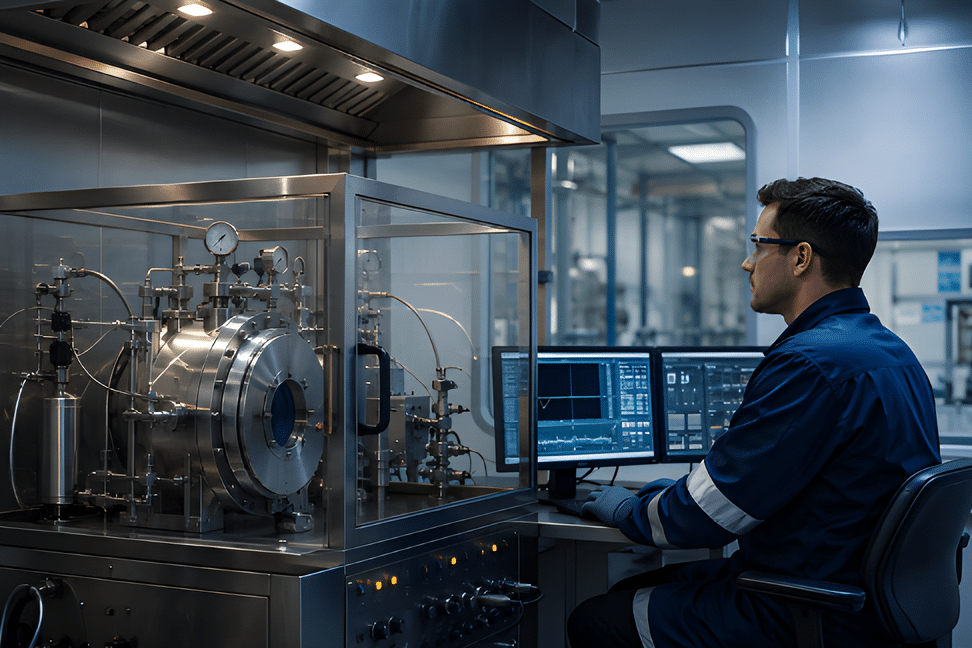
Flammability Testing Services
Understand the conditions that lead to gas and vapor explosions, common industrial scenarios, and how facilities can reduce the risk.

Building a Combustible Dust Safety Program
Understand the conditions that lead to gas and vapor explosions, common industrial scenarios, and how facilities can reduce the risk.

ATEX vs IECEx Hazardous Area Classification
Understand the conditions that lead to gas and vapor explosions, common industrial scenarios, and how facilities can reduce the risk.
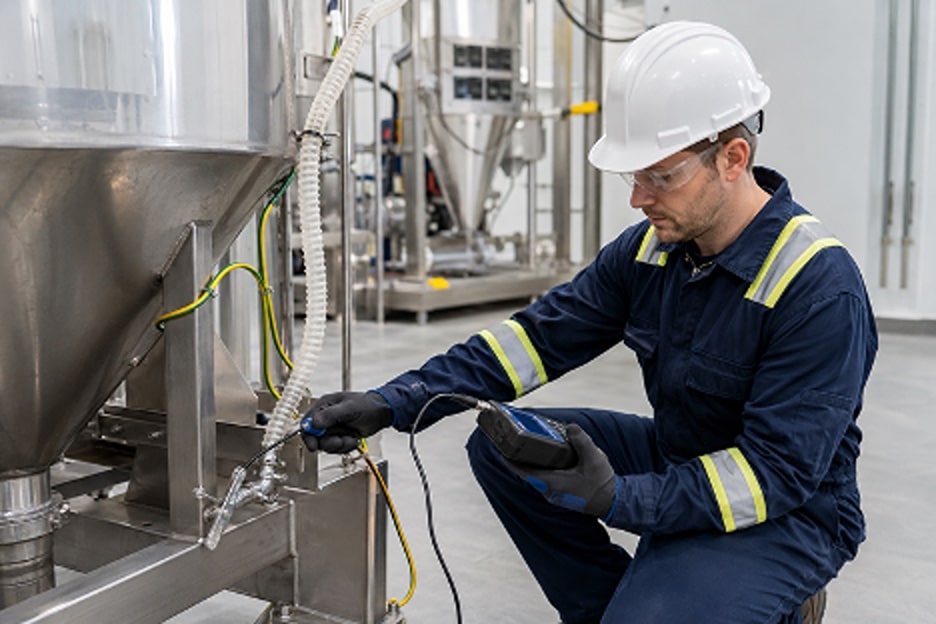
Protect Against Electrostatic Hazards
Understand the conditions that lead to gas and vapor explosions, common industrial scenarios, and how facilities can reduce the risk.
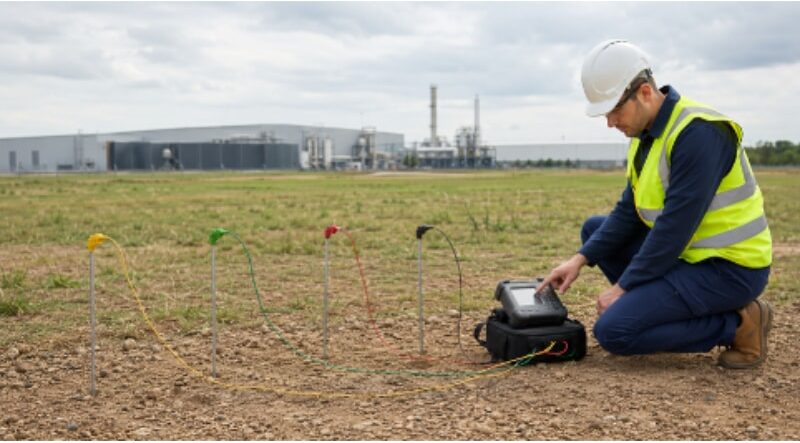
Soil Resistivity Information and Field Testing
Understand the conditions that lead to gas and vapor explosions, common industrial scenarios, and how facilities can reduce the risk.

SDS Creation and Physical Property Testing
Understand the conditions that lead to gas and vapor explosions, common industrial scenarios, and how facilities can reduce the risk.

UN/DOT HAZARDOUS MATERIALS TESTING
Understand the conditions that lead to gas and vapor explosions, common industrial scenarios, and how facilities can reduce the risk.

Thermal Stability Testing
Understand the conditions that lead to gas and vapor explosions, common industrial scenarios, and how facilities can reduce the risk.

Combustible Dust Hazard Identification and the Dust Hazard Analysis (DHA)
Understand the conditions that lead to gas and vapor explosions, common industrial scenarios, and how facilities can reduce the risk.

Chemical Reaction Hazard Testing & Reactive Chemical Services
Understand the conditions that lead to gas and vapor explosions, common industrial scenarios, and how facilities can reduce the risk.