


While static electricity is often associated with harmless everyday annoyances, like a party balloon sticking to a wall or clothes clinging straight out of the dryer, it presents severe process safety hazards in industrial settings.
Many operators overlook how common insulating materials, such as plastic containers, powder scoops, pipe linings, spiral-reinforced hoses, and flexible or rigid drum liners, behave in volatile environments. Because these materials store electrostatic charges for extended periods, they can trigger catastrophic events when handled improperly.
The Mechanics of Brush Discharges
Consider standard high-density polyethylene (HDPE), whether configured as a thin, flexible plastic bag or the thick wall of a rigid drum. When these surfaces experience friction—such as wiping, material sliding, or pneumatic filling, they easily acquire a net electrostatic charge. Under low ambient humidity, you might even notice a faint crackling sound or see tiny flashes of light in the dark.
This phenomenon produces what safety engineers call a brush discharge.
- The Process: Rubbing strips or adds electrons to the plastic surface. When a grounded object (like a worker’s finger or a tool) approaches, the localized electric field intensifies until it exceeds the breakdown strength of air.
- The Limitation of Insulators: Unlike metals, charge cannot freely flow across an insulator’s surface. Consequently, the discharge neutralizes only a small, localized zone (roughly 10 to 20 cm across) directly adjacent to the trigger point, leaving trapped charges elsewhere on the container.
- The Ignition Risk: Brush discharges can release up to roughly 4 mJ of energy. Because many common chemical and pharmaceutical solvent vapors have Minimum Ignition Energies (MIE) well below this threshold, standard plastic surfaces can effortlessly ignite flammable vapor-air mixtures.

Why Grounding Plastics Fails
A widespread misconception is that attaching a grounding cable to a plastic drum or liner will neutralize static risks.
In reality, static electricity does not flow across insulating surfaces. Grounding a piece of plastic does little to drain surface charges unless the material is wet or humidity is exceptionally high. Conductive equipment requires grounding and bonding, but insulating plastics demand entirely different safety strategies.
Beyond Basic Brush Discharges: Spark and Propagating Discharges
Insulating components introduce multiple layers of electrostatic risk into a facility:
- Spark Discharges: Insulating liners and items can inadvertently isolate conductive metal plant equipment from the ground. If an isolated metal component accumulates a charge, it can discharge via a high-energy spark capable of igniting surrounding atmospheres.
- Propagating Brush Discharges: When a thin insulating liner sits in tight contact with a grounded conductor, such as a polyethylene liner inside a steel drum or fiberboard keg, a dangerous capacitor-like effect occurs. Under specific conditions involving liner thickness and volume resistivity, friction can generate propagating brush discharges. These are exceptionally energetic, highly luminous, and possess enough power to instantly ignite heavy dust clouds and solvent vapors.

Best Practices for Mitigation
To protect operations against electrostatic incidents involving plastic packaging, facilities handling flammable liquids or combustible powders should consider the following safeguards:
- Evaluate Material Properties: Understand the volume and surface resistivity of the liners and containers you use.
- Utilize Alternative Materials: Where flammable atmospheres are present, transition away from standard insulating plastics (Type A) toward static-dissipative or anti-static liners, or conductive alternatives that safely bleed off electrical charges.
- Review Industry Standards: Consult established safety guidelines such as NFPA 77 (Recommended Practice on Static Electricity) and IEC/TS 60079-32-1 (Explosive atmospheres – Electrostatic hazards) to shape your plant’s standard operating procedures.
Related Blogs

How to Prevent Dust Explosions and Meet NFPA 660 Requirements
Understand the conditions that lead to gas and vapor explosions, common industrial scenarios, and how facilities can reduce the risk.

Flammability Testing Services
Understand the conditions that lead to gas and vapor explosions, common industrial scenarios, and how facilities can reduce the risk.

Building a Combustible Dust Safety Program
Understand the conditions that lead to gas and vapor explosions, common industrial scenarios, and how facilities can reduce the risk.

ATEX vs IECEx Hazardous Area Classification
Understand the conditions that lead to gas and vapor explosions, common industrial scenarios, and how facilities can reduce the risk.
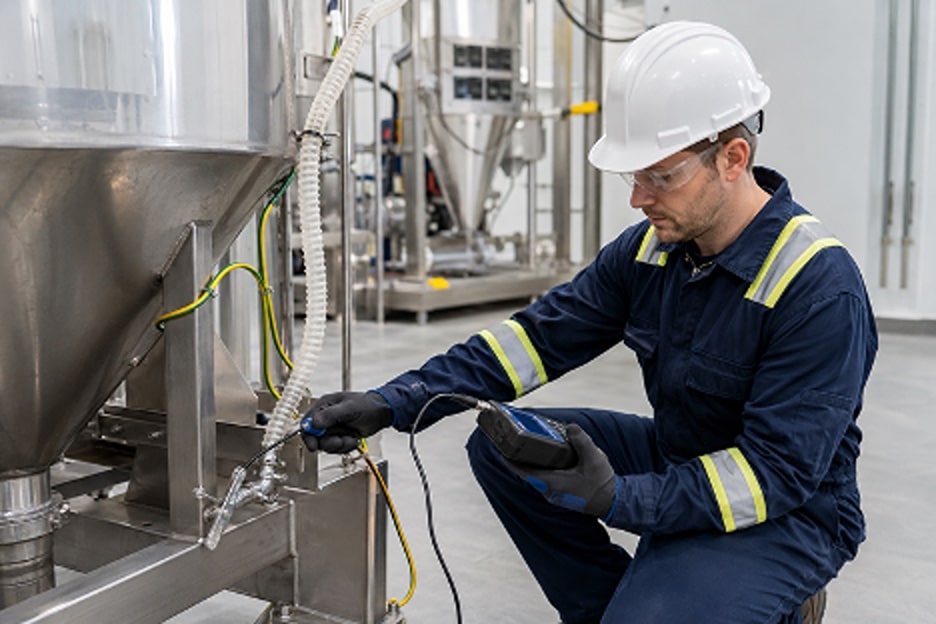
Protect Against Electrostatic Hazards
Understand the conditions that lead to gas and vapor explosions, common industrial scenarios, and how facilities can reduce the risk.
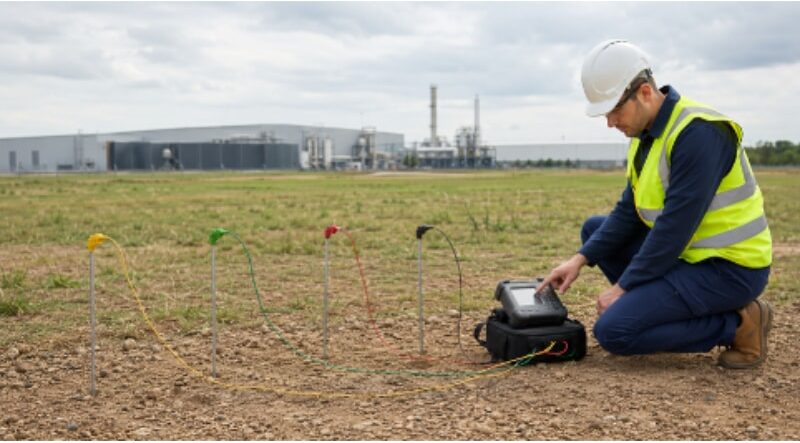
Soil Resistivity Information and Field Testing
Understand the conditions that lead to gas and vapor explosions, common industrial scenarios, and how facilities can reduce the risk.

SDS Creation and Physical Property Testing
Understand the conditions that lead to gas and vapor explosions, common industrial scenarios, and how facilities can reduce the risk.

UN/DOT HAZARDOUS MATERIALS TESTING
Understand the conditions that lead to gas and vapor explosions, common industrial scenarios, and how facilities can reduce the risk.

Thermal Stability Testing
Understand the conditions that lead to gas and vapor explosions, common industrial scenarios, and how facilities can reduce the risk.

Combustible Dust Hazard Identification and the Dust Hazard Analysis (DHA)
Understand the conditions that lead to gas and vapor explosions, common industrial scenarios, and how facilities can reduce the risk.

Chemical Reaction Hazard Testing & Reactive Chemical Services
Understand the conditions that lead to gas and vapor explosions, common industrial scenarios, and how facilities can reduce the risk.

ASTM Testing Services
Understand the conditions that lead to gas and vapor explosions, common industrial scenarios, and how facilities can reduce the risk.