

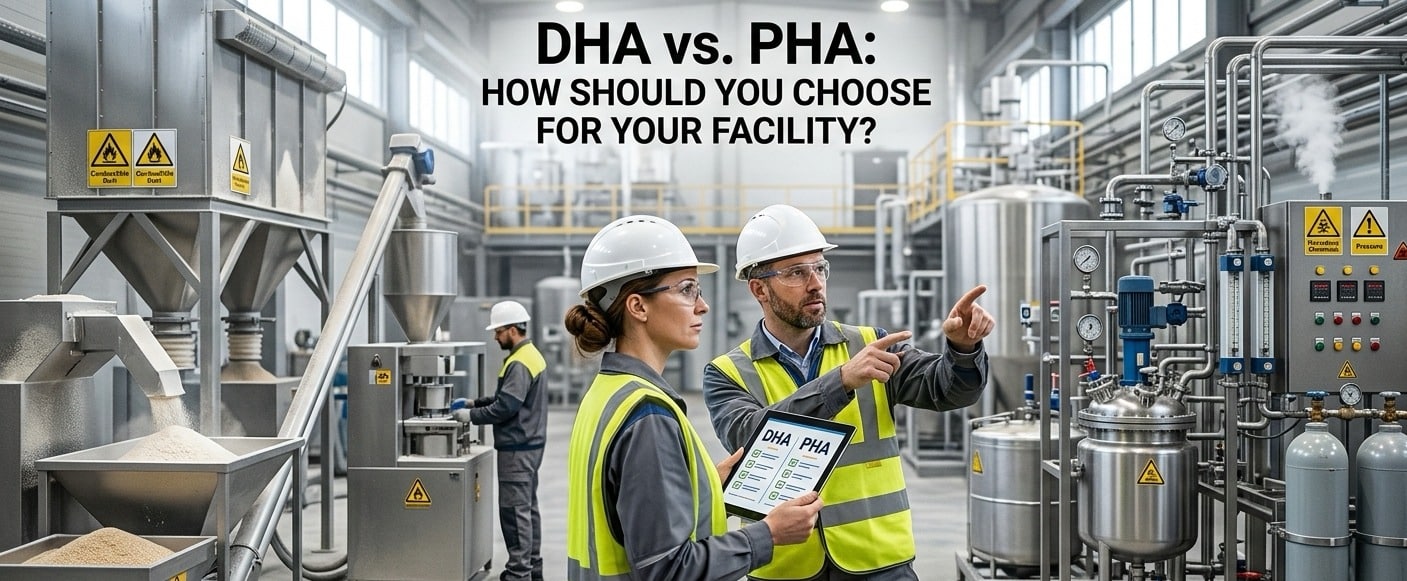
DHA vs. PHA: How Should You Choose for Your Facility?
When evaluating industrial process hazards, facility managers and safety personnel frequently weigh two critical assessments: Process Hazard Analysis (PHA) and Dust Hazard Analysis (DHA). While both systematically evaluate facility risks to protect workers and assets, mistaking one for the other—or assuming a traditional PHA automatically covers dust explosion risks—can leave dangerous gaps in your safety management system.
Understanding how PHA and DHA differ, where they intersect, and how to determine what your facility requires is essential for maintaining safety and compliance.
Process Hazard Analysis (PHA): The Broad Process Safety Standard
A Process Hazard Analysis is a comprehensive, structured evaluation designed to identify, evaluate, and control hazards associated with processing or handling highly hazardous chemicals.
-
-
Regulatory Driver: OSHA Process Safety Management (PSM) standard (29 CFR 1910.119) and EPA Risk Management Program (RMP).
-
Primary Scope: Focuses on fluid systems, chemical reactions, pressure vessels, toxicity, runaway reactions, line ruptures, and instrumentation failures.
-
Common Methodologies: HAZOP (Hazard and Operability Study), What-If / Checklist, FMEA (Failure Mode and Effects Analysis).
-
Best Suited For: Facilities managing threshold quantities of flammable liquids/gases, toxic chemicals, or reactive species.
-

Dust Hazard Analysis (DHA): The Combustible Particulate Specialist
A Dust Hazard Analysis is a specialized assessment focused strictly on the fire, flash fire, and deflagration hazards associated with combustible particulate solids (powders, dusts, flakes, and fibers).
-
Regulatory Driver: NFPA 652 (Standard on the Fundamentals of Combustible Dust), industry-specific standards (NFPA 654, 61, 484, 664), and local fire codes under the OSHA General Duty Clause.
-
Primary Scope: Focuses on dust cloud generation, enclosure volumes, ignition sources (static discharge, hot bearings, friction), deflagration severity ( and ), housekeeping, and explosion isolation/venting.
-
Common Methodology: Point-by-point evaluation of dry material handling equipment, dust collectors, ductwork, process vessels, and building locations where fugitive dust accumulates.
-
Best Suited For: Any facility handling, milling, conveying, screening, or storing combustible dry bulk solids.
Feature |
Process Hazard Analysis (PHA) |
Dust Hazard Analysis (DHA) |
|---|---|---|
| Core Focus | Chemical releases, liquid/gas fires, runaway reactions | Primary deflagrations, secondary dust explosions, flash fires |
| Primary Standard | OSHA PSM (29 CFR 1910.119) | NFPA 652 / NFPA 654 |
| Material State | Liquids, vapors, gases, reactive mixtures | Solid particulates, powders, granules, dusts |
| Key Parameters | Temperature, pressure, flow rate, chemical concentration | Particle size, moisture, Kst, Pmax, MIE (Minimum Ignition Energy) |
How to Choose the Right Assessment
Choosing between a PHA and a DHA depends on your material forms and regulatory applicability.
- You need only a DHA if: Your facility processes or stores combustible powders (e.g., wood dust, flour, sugar, plastics, metal powders) but does not handle PSM-threshold hazardous chemicals.
- You need only a PHA if: Your operations fall under OSHA PSM for liquid or gas handling, but involve zero combustible dry particulates.
- You need BOTH if: You operate a PSM-covered chemical or manufacturing plant that also handles, conveys, or generates combustible powders or dry solids.
A common pitfall is relying on a standard HAZOP to cover combustible dust. Traditional PHAs often overlook hidden overhead dust accumulation, ductwork deflagration propagation, or specific NFPA explosion isolation requirements. If combustible solids are present within a PSM-covered process, performing a dedicated DHA—or integrating a qualified dust safety specialist into your PHA team—ensures complete life-safety and regulatory coverage.

Would you like me to tailor this post for a specific industry like food processing or pharmaceuticals?
Related Blogs

Basket Self-Heating and Scale-Up Testing
Understand the conditions that lead to gas and vapor explosions, common industrial scenarios, and how facilities can reduce the risk.

How to Prevent Dust Explosions and Meet NFPA 660 Requirements
Understand the conditions that lead to gas and vapor explosions, common industrial scenarios, and how facilities can reduce the risk.
Flammability Testing Services
Understand the conditions that lead to gas and vapor explosions, common industrial scenarios, and how facilities can reduce the risk.

Building a Combustible Dust Safety Program
Understand the conditions that lead to gas and vapor explosions, common industrial scenarios, and how facilities can reduce the risk.

ATEX vs IECEx Hazardous Area Classification
Understand the conditions that lead to gas and vapor explosions, common industrial scenarios, and how facilities can reduce the risk.
Protect Against Electrostatic Hazards
Understand the conditions that lead to gas and vapor explosions, common industrial scenarios, and how facilities can reduce the risk.
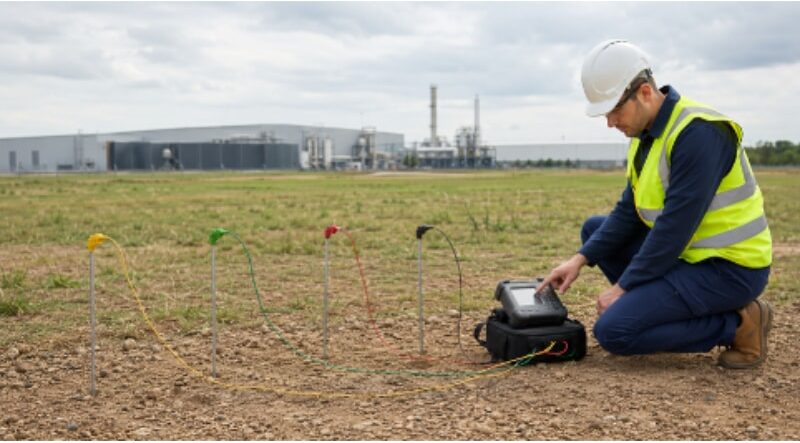
Soil Resistivity Information and Field Testing
Understand the conditions that lead to gas and vapor explosions, common industrial scenarios, and how facilities can reduce the risk.

SDS Creation and Physical Property Testing
Understand the conditions that lead to gas and vapor explosions, common industrial scenarios, and how facilities can reduce the risk.

UN/DOT HAZARDOUS MATERIALS TESTING
Understand the conditions that lead to gas and vapor explosions, common industrial scenarios, and how facilities can reduce the risk.

Thermal Stability Testing
Understand the conditions that lead to gas and vapor explosions, common industrial scenarios, and how facilities can reduce the risk.

Combustible Dust Hazard Identification and the Dust Hazard Analysis (DHA)
Understand the conditions that lead to gas and vapor explosions, common industrial scenarios, and how facilities can reduce the risk.

Chemical Reaction Hazard Testing & Reactive Chemical Services
Understand the conditions that lead to gas and vapor explosions, common industrial scenarios, and how facilities can reduce the risk.