

Quick Guide
Why Combustible Dust Hazards Deserve Close Attention
What Is Combustible Dust?
The Dust Explosion Pentagon
Why Secondary Explosions Can Be Catastrophic
What Is a Dust Hazard Analysis?
NFPA 660 and the Current DHA Framework
Equipment Commonly Evaluated During a DHA
Hazardous Areas Outside Process Equipment
Credible Ignition Sources
Testing Data That Supports the DHA
A Practical DHA Process
Prevention and Protection May Both Be Necessary
Common DHA Deficiencies
When Should a DHA Be Reviewed or Updated?
How Prime Process Safety Center Can Help
Combustible Dust Hazard Identification and the Dust Hazard Analysis (DHA)
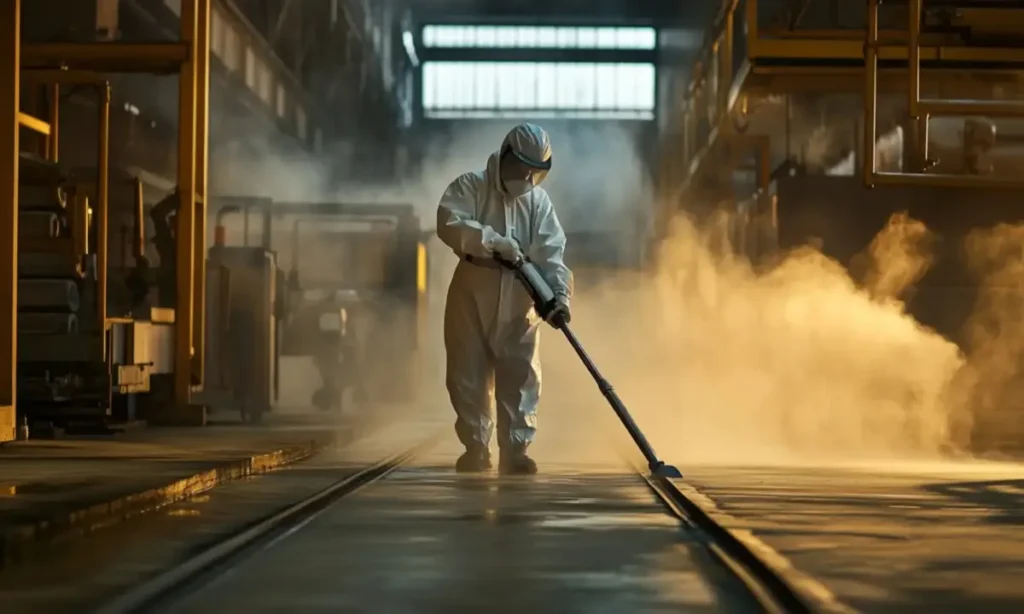
Identifying fire, flash-fire, deflagration, and explosion hazards under the current NFPA 660 framework.
Combustible dust hazards require facility-specific evaluation of materials, equipment, ignition sources, and safeguards. Source: Prime Process Safety Center
Why Combustible Dust Hazards Deserve Close Attention
Combustible dust hazards are often hidden in ordinary-looking operations. A material may be safely handled in a closed bag or container yet become explosible when milling, conveying, blending, drying, sanding, or packaging generates fine airborne particles.
A small fire inside a dust collector, an overheated bearing, an electrostatic discharge, or tramp metal entering a mill can initiate a deflagration. If flame and pressure propagate through connected ductwork—or disturb dust accumulated throughout the building—the initiating event can escalate into a destructive secondary explosion.
A properly conducted Dust Hazard Analysis systematically identifies these scenarios, evaluates existing safeguards, and establishes practical recommendations for preventing and mitigating incidents. Learn about Prime Process Safety Center DHA services.
What Is Combustible Dust?
Combustible dust is a finely divided solid material that can ignite or explode when dispersed in air under appropriate conditions. Products that burn slowly in bulk form can react much more rapidly when reduced to a sufficiently small particle size because a greater surface area is exposed to oxygen.
- Agricultural and food products, including flour, sugar, starch, cocoa, spices, milk powder, feed, and grain.
- Wood dust, paper fibers, and cellulose materials.
- Coal, carbon black, and other carbonaceous dusts.
- Aluminum, magnesium, titanium, zirconium, iron alloys, and other metal powders.
- Plastics, polymers, resins, rubber dusts, pharmaceuticals, pigments, dyes, sulfur, and specialty chemicals.
Whether a material presents a hazard cannot always be determined from its trade name or Safety Data Sheet. Representative testing may be required to establish ignition sensitivity, explosibility, burning behavior, and explosion severity.
Combustible dust testing helps define the data needed for a technically defensible DHA. Source: Prime Process Safety Center
The Dust Explosion Pentagon
A dust explosion normally requires five elements: combustible dust, an oxidant, an effective ignition source, dispersion at an explosible concentration, and confinement. Removing or adequately controlling one element can prevent an explosion, but a DHA should not rely on a safeguard without examining its suitability, reliability, inspection needs, and credible failure modes.
The dust explosion pentagon extends the fire triangle by adding dispersion and confinement. Source: Prime Process Safety Center technical illustration
Why Secondary Explosions Can Be Catastrophic
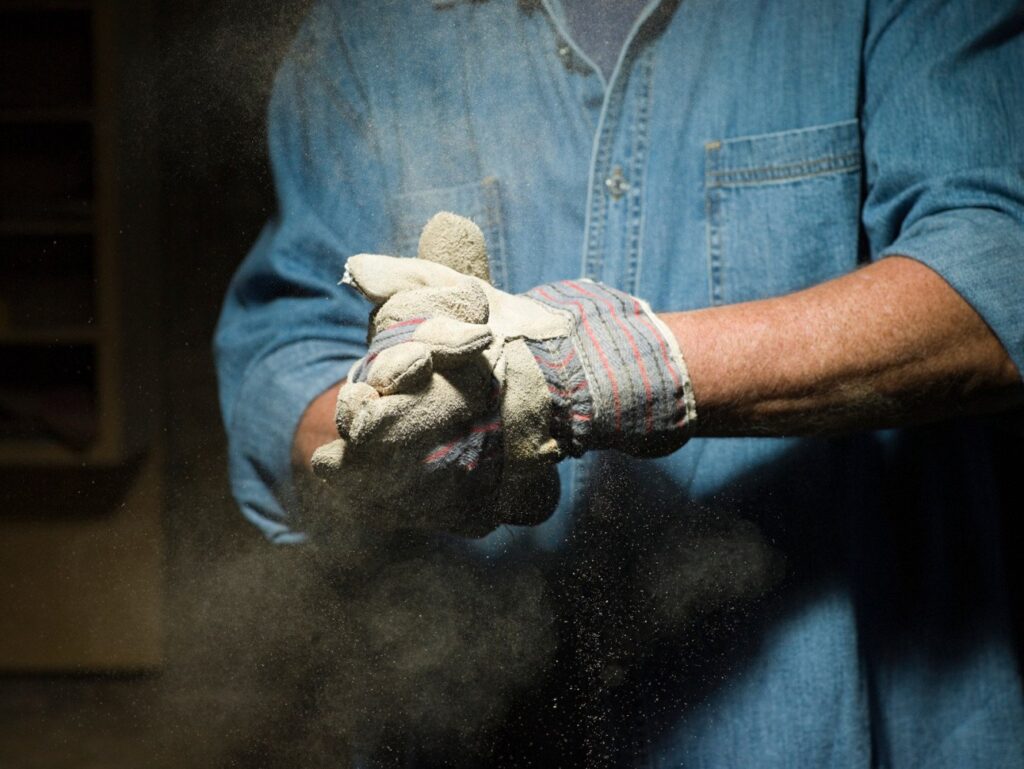
A primary deflagration may begin inside a dust collector, mill, blender, dryer, bucket elevator, or process vessel. Its pressure wave can rupture equipment, travel through ducts, and dislodge deposits on structural beams, cable trays, pipes, light fixtures, machinery, floors, ledges, and concealed surfaces.
Once dispersed, this additional fuel can ignite across a much larger volume. Secondary explosions are often more destructive than the initiating event because they can involve substantial accumulated dust throughout an occupied building.
What Is a Dust Hazard Analysis?
A DHA is a documented, systematic evaluation of fire, flash-fire, deflagration, explosion, and related reactivity hazards associated with combustible particulate solids. It should evaluate the facility as an integrated system rather than as a list of individual machines.
- What combustible materials are present, and what are their relevant properties?
- Where can dust be generated, released, accumulated, dispersed, conveyed, collected, or stored?
- What credible ignition sources and abnormal operating conditions are present?
- What fire, flash-fire, deflagration, propagation, and secondary-explosion scenarios could occur?
- Which prevention and protection safeguards are installed, and are they effective and maintained?
- What recommendations, interim measures, owners, priorities, and closure evidence are required?
NFPA 660 and the Current DHA Framework
Older combustible-dust programs commonly reference NFPA 652 and industry-specific standards such as NFPA 61, NFPA 654, NFPA 655, and NFPA 664. These requirements were consolidated into the 2025 edition of NFPA 660, Standard for Combustible Dusts and Particulate Solids. NFPA 660 is now the principal current framework for combustible-dust safety and DHA requirements.
- A DHA is performed or led by a qualified person.
- Credible incident scenarios and existing safeguards are documented and evaluated.
- Recommendations are tracked to resolution and interim controls are considered where necessary.
- DHAs are revalidated at least every five years and reviewed when materials, equipment, or processes change.
- Management systems address training, inspection, maintenance, housekeeping, emergency planning, and management of change.
NFPA 68 and NFPA 69 remain separate references for deflagration venting and explosion-prevention systems. NFPA 70 addresses electrical installations, NFPA 77 addresses static electricity, and NFPA 499 supports combustible-dust hazardous-area classification. Read Prime Process Safety Center’s NFPA 660 guide.
Equipment Commonly Evaluated During a DHA
A DHA should follow the material through receiving, processing, recycle, collection, packaging, storage, and waste handling. Typical equipment and hazards include:
| Equipment or location | Typical hazard considerations |
|---|---|
| Bins, tanks, hoppers, and silos | Dust clouds during filling; smoldering material; static discharge; hot material; explosion propagation |
| Mills, grinders, and pulverizers | Mechanical sparks; tramp metal; overheated bearings; dense dust clouds; rapid pressure development |
| Dryers and ovens | Hot surfaces; burner products; temperature excursion; self-heating; deposits; loss of airflow |
| Dust collectors and filter receivers | Frequent explosible clouds; filter fire; static discharge; fan contact; propagation through ducts |
| Pneumatic conveying systems | High charge generation; impact sparks; burning particles; propagation between connected equipment |
| Conveyors and bucket elevators | Friction; rubbing; belt slip; misalignment; product buildup; bearing failure; vertical flame propagation |
| Blenders, mixers, sifters, and screens | Dust clouds during charging; foreign objects; rubbing; screen failure; electrostatic charging |
| Packaging rooms and buildings | Fugitive dust; secondary explosion; unsuitable electrical equipment; hidden deposits; personnel exposure |
Bucket elevators can combine internal dust clouds with belt slip, misalignment, bearing failure, and vertical flame-propagation hazards. Source: Industrial equipment photograph; image source referenced in document sources
Dust collectors commonly contain explosible dust clouds and may connect multiple process areas through ductwork. Source: Industrial equipment photograph; image source referenced in document sources
Hazardous Areas Outside Process Equipment
A closed process does not automatically eliminate building hazards. Dust may escape from open charging and packaging, poorly sealed transfer points, damaged ductwork, failed filters, inadequate local exhaust ventilation, maintenance, compressed-air cleaning, and process upsets.
The walkdown should examine visible and concealed deposits—not only the floor. Where airborne dust or accumulations affect electrical equipment selection, a separate hazardous-area classification may be required.
Hazardous-area classification supports the selection and installation of electrical equipment in locations where combustible dust may be present. Source: Prime Process Safety Center
Prime Process Safety Center performs both Division and Zone-based hazardous-area classification studies. View hazardous-area classification services.
Credible Ignition Sources
Identifying dust-containing equipment is only the beginning. Each DHA node should be evaluated for credible ignition sources during normal operation, startup, shutdown, expected malfunction, maintenance, and foreseeable upset conditions.
1. Open Flames and Hot Work
Welding, cutting, brazing, grinding, process burners, portable heaters, smoking, and fires in connected equipment can ignite dust clouds or deposits. Controls may include a formal hot-work permit, pre-work combustible-dust inspection, equipment isolation, fire watch, fire protection, and post-work monitoring.
Hot work can ignite visible or concealed combustible-dust deposits and dust inside connected equipment. Source: Industrial hot-work photograph; image source referenced in document sources
2. Electrical Ignition Sources
Electrical arcs, sparks, loose connections, unsuitable enclosures, damaged wiring, and excessive surface temperatures can ignite a dust cloud or layer. Dust can enter improperly rated enclosures or blanket motors and reduce cooling. Electrical equipment should be selected according to the applicable area classification and installation requirements.
3. Mechanical Sparks and Frictional Heating
Tramp metal, fan contact, misalignment, belt slip, failed bearings, seized shafts, broken screens, and high-speed impact can produce sparks, hot fragments, or overheated surfaces. Potential controls include metal detection, magnets, bearing-temperature monitoring, vibration monitoring, alignment switches, zero-speed switches, spark detection, and disciplined preventive maintenance.
4. Electrostatic Discharge
Pneumatic conveying, sieving, mixing, filling, dumping, and flow through nonconductive hoses can generate charge. Credible mechanisms may include spark, brush, propagating-brush, cone, and corona discharges. Bonding and grounding are essential but do not control every hazard, particularly those involving insulating powders, liners, hoses, coatings, or large bulk vessels.
Electrostatic hazard assessment evaluates charge generation, accumulation, discharge mechanisms, and ignition sensitivity. Source: Prime Process Safety Center
The evaluation should compare credible discharge energy with representative minimum ignition energy data and consider material resistivity, equipment geometry, fill rate, humidity, and grounding continuity. Explore electrostatic hazard assessment services.
5. Hot Surfaces
Motors, bearings, dryers, ovens, heaters, ducts, brakes, and lighting can ignite a dust cloud or deposit. Accumulated dust can also insulate equipment and cause temperatures to rise. The analysis should consider normal temperature and foreseeable failure conditions such as blocked airflow, thermostat failure, bearing failure, or product buildup.
6. Self-Heating, Smoldering, and Chemical Reactivity
Some powders undergo exothermic oxidation, decomposition, or biological activity during storage. Heat may accumulate in silos, bins, cyclones, dryers, dust collectors, hoppers, filter cakes, waste containers, and bulk bags. Metal powders may introduce water-reactivity or pyrophoricity concerns, and flammable vapor can create a more sensitive hybrid mixture with dust.
Testing Data That Supports the DHA
Testing should represent the material as it exists—or could foreseeably exist—in the process. Particle size, moisture, composition, contamination, and sampling location can materially affect the result.
| Test | How the result supports the DHA |
|---|---|
| Go/no-go explosibility screening | Determines whether a dispersed sample can produce a measurable deflagration under prescribed conditions |
| Kst and Pmax | Characterizes explosion severity and supports deflagration-protection design |
| Minimum Explosible Concentration (MEC) | Identifies the lowest tested airborne concentration capable of propagating a deflagration |
| Minimum Ignition Energy (MIE) | Supports evaluation of electrostatic and other low-energy ignition sources |
| Minimum Autoignition Temperature—Cloud | Supports evaluation of heated surfaces and hot atmospheres |
| Layer Ignition Temperature | Evaluates ignition of deposited dust on a heated surface |
| Limiting Oxygen Concentration (LOC) | Supports inerting and oxidant-reduction strategies |
| Burning behavior and self-heating | Evaluates combustion propagation, thermal instability, and bulk-storage hazards |
No single value defines the entire hazard. Kst, for example, describes normalized explosion severity under prescribed conditions; it does not indicate ignition likelihood, electrostatic sensitivity, or self-heating potential. For comprehensive testing solutions, view our combustible dust testing services.
A Practical DHA Process
- Define the hazard basis: Collect SDSs, test reports, material specifications, process-flow diagrams, P&IDs, equipment drawings, ventilation information, operating procedures, maintenance records, and incident history.
- Conduct the facility walkdown: Follow the material from receiving through processing, collection, recycle, packaging, storage, and waste handling. Include operators and maintenance personnel who understand actual abnormal conditions.
- Divide the process into nodes: Create manageable DHA nodes such as bag dump, mill, mixer, pneumatic line, collector, silo, packaging room, and warehouse.
- Identify credible scenarios: Evaluate equipment fire, room flash fire, internal deflagration, propagation, secondary explosion, self-heating, and chemical-reactivity events.
- Evaluate safeguards: Confirm that prevention and protection measures are correctly designed, functional, inspected, tested, and capable of addressing the specific scenario.
- Rank risk and develop recommendations: Link each recommendation to a hazard, assign priority and ownership, identify interim measures, and define closure evidence.
- Implement and revalidate: Track actions to completion and integrate the findings into training, maintenance, emergency planning, management of change, and the five-year revalidation cycle.
Prevention and Protection May Both Be Necessary
| Prevention—reduce event likelihood | Protection—reduce event consequences |
|---|---|
| Dust containment and local exhaust ventilation | Deflagration venting or flameless venting |
| Housekeeping and fugitive-dust control | Chemical explosion suppression |
| Bonding, grounding, and static-dissipative equipment | Deflagration isolation between connected equipment |
| Classified electrical equipment and hot-work control | Explosion-resistant construction |
| Foreign-material exclusion and equipment monitoring | Fire detection and automatic extinguishing |
| Temperature control, maintenance, and inerting | Safe vent-discharge arrangements and restricted zones |
Explosion protection measures must be engineered for the material, equipment geometry, operating conditions, connections, and personnel exposure. Source: Prime Process Safety Center
Protection systems require equipment-specific engineering. Venting without isolation can allow flame and pressure to propagate through connecting ducts. Review combustible-dust explosion protection strategies.
Common DHA Deficiencies
- Assuming an SDS contains sufficient explosibility data or using non-representative material data.
- Evaluating the dust collector while overlooking upstream and downstream equipment.
- Crediting bonding without verifying electrical continuity.
- Installing explosion venting without deflagration isolation.
- Venting flame and pressure toward occupied areas or building egress.
- Ignoring hybrid mixtures, self-heating, water-reactive metals, or abnormal operations.
- Overlooking elevated and concealed accumulations that can fuel secondary explosions.
- Crediting alarms without suitable setpoints, shutdown logic, proof-testing, and operator response.
- Issuing a report without tracking recommendations to documented closure.
- Failing to update the DHA after process, material, equipment, or ventilation changes.
When Should a DHA Be Reviewed or Updated?
A DHA should be revalidated at least every five years and reviewed sooner whenever a change could affect the hazard basis. Examples include:
- Introducing a new powder, formulation, additive, or contaminant.
- Changing particle size, moisture content, production rate, or batch size.
- Replacing a dust collector or changing ductwork, conveying velocity, or ventilation.
- Installing, relocating, or modifying process equipment or protection systems.
- Experiencing a fire, explosion, overheating event, static discharge, or near miss.
How Prime Process Safety Center Can Help
Prime Process Safety Center supports new and existing facilities with integrated consulting, ISO/IEC 17025-accredited laboratory testing, and engineering interpretation. The objective is not simply to produce a compliance document—it is to provide a technically defensible roadmap for controlling real fire and explosion risk.
- Dust Hazard Analysis and five-year DHA revalidation.
- Combustible-dust explosibility, ignition-sensitivity, fire, and thermal testing.
- NFPA 660 and OSHA gap assessments.
- Hazardous-area classification and ignition-source analysis.
- Electrostatic hazard assessment and testing.
- Explosion prevention, venting, suppression, and isolation review.
- Dust sampling plans, management-of-change support, and combustible-dust training.
Need a Dust Hazard Analysis?
Prime Process Safety Center can help determine the appropriate testing and DHA scope for your materials and operations.
Request a consultation | (346) 462-3838 | info@primeprocesssafety.com
Related Blogs
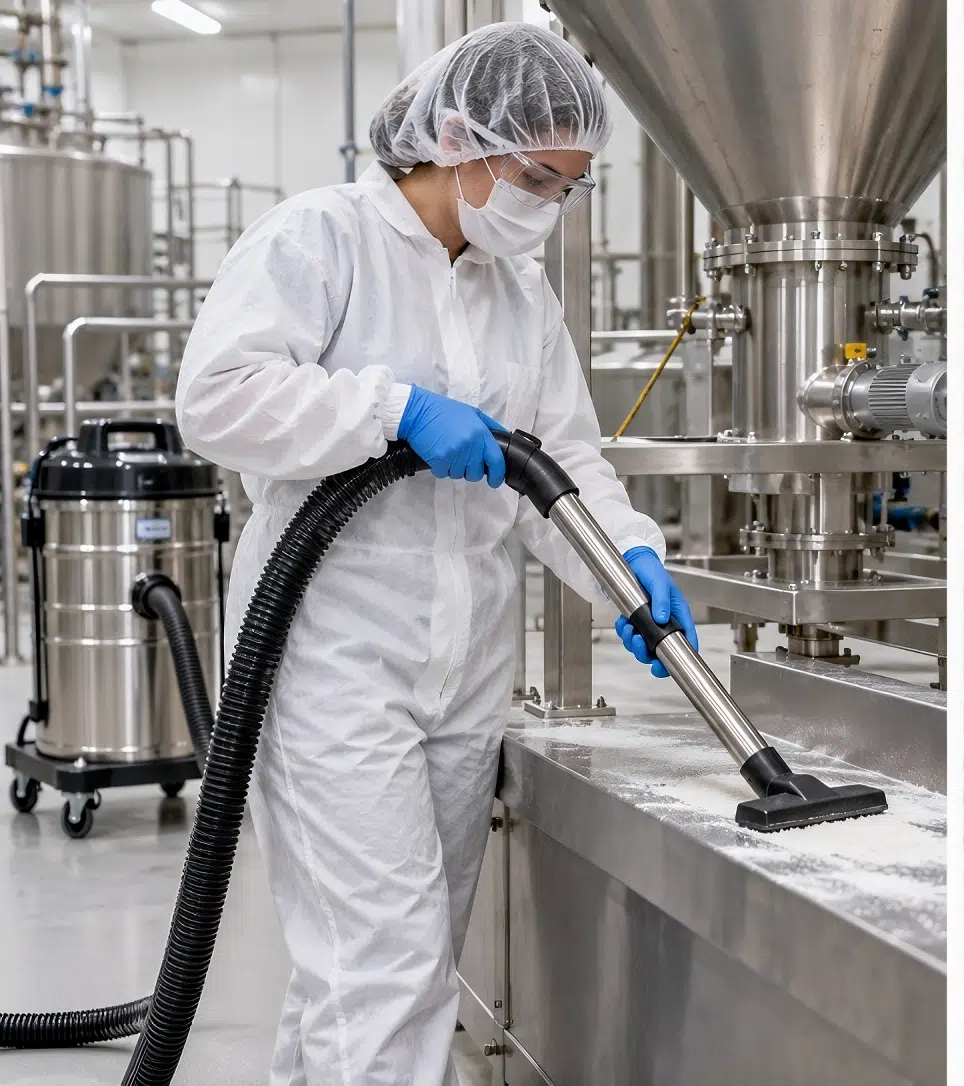
Combustible Dust Housekeeping: How to Build a Program That Prevents Secondary Explosions
Understand the conditions that lead to gas and vapor explosions, common industrial scenarios, and how facilities can reduce the risk.

Basket Self-Heating and Scale-Up Testing
Understand the conditions that lead to gas and vapor explosions, common industrial scenarios, and how facilities can reduce the risk.

How to Prevent Dust Explosions and Meet NFPA 660 Requirements
Understand the conditions that lead to gas and vapor explosions, common industrial scenarios, and how facilities can reduce the risk.
Flammability Testing Services
Understand the conditions that lead to gas and vapor explosions, common industrial scenarios, and how facilities can reduce the risk.

Building a Combustible Dust Safety Program
Understand the conditions that lead to gas and vapor explosions, common industrial scenarios, and how facilities can reduce the risk.

ATEX vs IECEx Hazardous Area Classification
Understand the conditions that lead to gas and vapor explosions, common industrial scenarios, and how facilities can reduce the risk.
Protect Against Electrostatic Hazards
Understand the conditions that lead to gas and vapor explosions, common industrial scenarios, and how facilities can reduce the risk.
Soil Resistivity Information and Field Testing
Understand the conditions that lead to gas and vapor explosions, common industrial scenarios, and how facilities can reduce the risk.

SDS Creation and Physical Property Testing
Understand the conditions that lead to gas and vapor explosions, common industrial scenarios, and how facilities can reduce the risk.

UN/DOT HAZARDOUS MATERIALS TESTING
Understand the conditions that lead to gas and vapor explosions, common industrial scenarios, and how facilities can reduce the risk.

Thermal Stability Testing
Understand the conditions that lead to gas and vapor explosions, common industrial scenarios, and how facilities can reduce the risk.

Combustible Dust Hazard Identification and the Dust Hazard Analysis (DHA)
Understand the conditions that lead to gas and vapor explosions, common industrial scenarios, and how facilities can reduce the risk.