


Table of Contents
- Why Transport Classification Matters
- What UN/DOT Testing Actually Determines
- Comprehensive Testing by UN Hazard Class
- Summary of Common UN/DOT Test Methods and Target Hazards
- From Sample to Shipping Classification: A Defensible Workflow
- Information to Provide When Requesting a Quote
- Common Mistakes That Create Delays or Weak Classifications
- Why Work With Prime Process Safety Center?
- Frequently Asked Questions About UN/DOT Testing
- Ready to Classify a Material?
UN/DOT HAZARDOUS MATERIALS TESTING
Accurate Classification of Dangerous Goods for Safe Transport

A practical guide to transport hazard classes, laboratory test methods, packing-group decisions, and defensible shipping documentation.
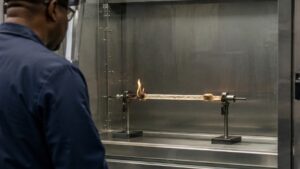
Controlled evaluation of physical hazards supports accurate UN classification and safe handling. Source: Prime Process Safety Center
KEY TAKEAWAY
A product name, an SDS entry, or a supplier statement does not by itself establish a transport classification. Classification must be based on the material as offered for transport, the applicable regulatory criteria, and—when required—reliable test data.
Why Transport Classification Matters
Dangerous goods move through a chain of manufacturers, formulators, contract packagers, freight forwarders, carriers, warehouses, and emergency responders. A defensible classification is the common technical language that tells each party what hazard is present and which controls apply. It supports selection of the proper shipping name and UN or NA identification number; hazard class and division; packing group; labels, marks, and placards; packaging instructions; quantity limits; shipping papers; segregation; and emergency-response information.
An incorrect classification can do more than delay a shipment. It may place an incompatible material in the wrong package, omit a required hazard label, apply an unsuitable temperature control, or expose personnel and property to fire, explosion, toxic, corrosive, or reactive hazards. It can also lead to rejected freight, enforcement action, product recalls, repackaging costs, and loss of customer confidence.
The United Nations Recommendations on the Transport of Dangerous Goods provide the international model framework. In the United States, the Pipeline and Hazardous Materials Safety Administration (PHMSA) administers the Hazardous Materials Regulations in 49 CFR Parts 171–180. The UN Manual of Tests and Criteria supplies many of the test methods and decision criteria used to determine whether a substance or article meets a particular hazard class or division. Explore our specialized UN/DOT Testing & Classification Services.
What UN/DOT Testing Actually Determines
Testing is not simply a pass/fail exercise. A well-designed program answers a sequence of regulatory questions: Does the material meet the definition of a hazardous material? Which hazard class or division best describes its primary hazard? Are subsidiary hazards present? Does a packing group apply? Is the product eligible for an exception, exclusion, or particular shipping description? What technical evidence should be retained to support the decision?
The correct test program depends on composition, physical form, particle size, concentration, packaging, intended mode of transport, and available screening information. Powders, liquids, aerosols, gases, pastes, polymeric beads, and reactive formulations may require very different methods. Testing should therefore begin with a technical review rather than a generic menu of tests.
Comprehensive Testing by UN Hazard Class
UN Class 1 — Explosives
Class 1 evaluation addresses substances and articles capable of explosive effects. The UN scheme uses staged test series and classification procedures; the appropriate sequence depends on whether the sample is a new substance, an article, a packaged product, or a candidate for exclusion from Class 1.
- Drop-impact sensitivity: Evaluates response to mechanical impact under defined conditions.
- Friction sensitivity: Evaluates whether friction can initiate reaction.
- Thermal stability: Screens for unsafe change or decomposition at elevated temperature. Learn more about our Thermal Stability Testing Services.
- Koenen test: Assesses the effect of heating a substance under confinement.
- Time/pressure test: Measures pressure rise after ignition under confinement and helps characterize explosive behavior.
IMPORTANT
Class 1 testing is a specialized, sequential classification process. No single sensitivity result establishes the complete division, compatibility group, or shipping classification.
UN Class 2 — Gases and Aerosols
Class 2 includes compressed, liquefied, dissolved, and refrigerated liquefied gases. Aerosol dispensers are commonly evaluated under the UN aerosol provisions to determine whether the contents and discharge behavior produce a flammability hazard.
- Heat of combustion (ASTM D240): Measures the energy released by combustion and can form part of aerosol flammability classification.
- Ignition-distance test: Determines whether a sprayed aerosol ignites and the distance over which ignition occurs.
- Enclosed-space ignition test: Evaluates ignition behavior in a confined volume; it is associated with UN Manual Section 31 procedures.
- Flame-projection test (ASTM D3065): Evaluates flame extension when the aerosol is discharged near an ignition source.
- Aerosol foam flammability: Assesses products discharged as foams, mousses, gels, or pastes. Explore our Gas and Vapor Flammability Testing.
UN Class 3 — Flammable Liquids
For liquids, flash point is a central classification property, but the correct method must match the product and regulatory purpose. Viscosity, suspended solids, volatility, and the expected flash-point range can affect method selection and interpretation. Learn more about Flammable Liquid: Flash Point and Fire Point testing.
- Flash point: Closed-cup methods such as ASTM D93 or ASTM D3278 are commonly used for transport classification; ASTM D92 is an open-cup method used for specified applications.
- Fire point (ASTM D92): Identifies the temperature at which vapors sustain burning under the test conditions.
- Sustained combustibility: UN Test L.2 or ASTM D4206 determines whether a liquid continues to burn under prescribed conditions and may support particular regulatory determinations.
UN Class 4 — Flammable Solids; Spontaneously Combustible; Dangerous When Wet
Class 4 covers several distinct mechanisms. Test selection must distinguish a material that propagates flame from one that ignites in air, self-heats over time, or evolves flammable gas in contact with water.
- Division 4.1 / UN N.1 burning-rate test: Evaluates readily combustible solids and flame propagation; results may determine whether the substance is Division 4.1 and the applicable packing group. Review our Readily Combustible Solids — UN Test N.1 Services.
- Division 4.1 / SADT methods: Self-reactive substances and polymerizing substances may require thermal-stability and self-accelerating decomposition temperature evaluation, using the applicable UN test series and method.
- Division 4.2 / UN N.2 pyrophoric-solids test: Determines whether a solid ignites shortly after contact with air.
- Division 4.2 / UN N.3 pyrophoric-liquids test: Evaluates ignition or charring behavior when a liquid is exposed to air under the prescribed procedure.
- Division 4.2 / UN N.4 self-heating test: Uses controlled basket testing to determine whether oxidative self-heating meets classification criteria. Explore Self-Heating / Basket Testing Services.
- Division 4.3 / UN N.5 water-reactivity test: Determines whether contact with water produces flammable gas at a rate or with ignition behavior that triggers the “dangerous when wet” classification. Read more on Water Reactivity — UN N.5 Services.
UN Class 5 — Oxidizing Substances and Organic Peroxides
Class 5 materials may intensity combustion or undergo energetic decomposition. Division 5.1 addresses oxidizing substances; Division 5.2 addresses organic peroxides. “Oxidizing peroxide” is not the formal Division 5.2 name.
- UN O.1 / O.3 oxidizing-solids tests: Compare the burning behavior of a test substance/cellulose mixture with the applicable reference mixtures. Visit our Oxidizing Solids — UN Test O.1 Page.
- UN O.2 oxidizing-liquids test: Measures the ability of a liquid to increase the burning rate or intensity of a combustible material.
- Organic-peroxide test series: May assess explosive properties, heating under confinement, deflagration, detonation, thermal stability, and SADT, depending on the formulation and classification pathway. See our full range of Reactive Chemical Testing Services.
UN Class 8 — Corrosive Substances
Class 8 classification can address irreversible skin damage and, in applicable cases, corrosion to metals. The required evidence and accepted alternatives depend on the regulatory pathway and available data.
- In vitro skin-corrosion methods: Validated methods such as Corrositex® may support a dermal-corrosion determination when used within their applicability domain and the governing regulatory requirements.
- UN C.1 metal-corrosivity test: Determines corrosion rate on specified aluminum and steel specimens under defined conditions; ASTM G31 provides general laboratory immersion-practice guidance and may support the test program where applicable.
UN Class 9 — Miscellaneous Dangerous Goods
Class 9 captures regulated hazards that do not fit another primary class. One specialized example involves polymeric beads, expandable plastics, or molding materials that may evolve flammable vapor.
- UN U.1 test: Determines whether a substance is liable to evolve flammable vapors and supports evaluation of entries such as UN 2211, POLYMERIC BEADS, EXPANDABLE, evolving flammable vapor.
What About Classes 6 and 7?
Class 6 covers toxic and infectious substances, while Class 7 covers radioactive material. These categories require specialized toxicology, biological, radiological, or competent-authority pathways that are different from the physical-hazard tests emphasized in this article. A complete classification review should still consider them whenever composition, intended use, or known data indicate that those hazards may be present.

Summary of Common UN/DOT Test Methods and Target Hazards
A primary reference for selecting the appropriate physical-hazard laboratory method based on regulatory classification requirements.
| UN Hazard Class / Division | Primary Test Method | Target Hazard / Parameter Measured | Typical Applications |
|---|---|---|---|
| Class 1 Explosives | Time/Pressure, Koenen, Impact/Friction | Sensitivity to mechanical shock, friction, and heating under confinement | Energetic solids, propellants, explosive candidates |
| Class 2 Aerosols | ASTM D240, Flame Projection, Enclosed Space | Heat of combustion, ignition distance, spray flame extension | Consumer aerosols, spray coatings, pressurized canisters |
| Class 3 Flammable Liquids | ASTM D93 / D3278 (Flash Point), UN L.2 | Closed-cup flash point, sustained combustibility | Solvents, fuels, liquid formulations, paints |
| Division 4.1 Combustible Solids | UN Test N.1 | Flame propagation rate and wetted-zone behavior | Powders, granules, readily combustible organic solids |
| Division 4.2 Spontaneously Combustible | UN Test N.2 / N.3 (Pyrophoric), UN Test N.4 | Air ignition timing, isothermal self-heating in wire baskets | Organometallics, bulk powders, self-heating solids |
| Division 4.3 Dangerous When Wet | UN Test N.5 | Evolution rate and flammability of gas upon water contact | Water-reactive metals, hydrides, moisture-sensitive solids |
| Division 5.1 Oxidizers | UN Test O.1 / O.3 (Solids), UN Test O.2 (Liquids) | Burning rate enhancement when mixed with combustibles | Nitrates, chlorates, inorganic peroxides, oxidizers |
| Division 5.2 / 4.1 Self-Reactive | UN H.1 – H.4 (SADT / SAPT) | Critical temperature for self-accelerating thermal runaway | Organic peroxides, self-reactive monomers, temperature-controlled goods |
| Class 8 Corrosives | UN Test C.1, In Vitro Dermal (Corrositex®) | Corrosion rate on steel/aluminum, skin tissue destruction time | Acids, bases, metal-corrosive liquids, process chemicals |
| Class 9 Miscellaneous | UN Test U.1 | Flammable vapor evolution rate | Polymeric beads, expandable plastic molding materials |
Table 1. Overview of UN transport hazard testing parameters.
From Sample to Shipping Classification: A Defensible Workflow
To ensure regulatory compliance and safety, transport classification should follow a structured, documented procedure from initial sample preparation to final shipping paperwork.
- 1. Define the material as offered for transport: Document composition, concentration, physical state, particle size, moisture content, stabilizers, temperature, and commercial packaging. A laboratory sample that differs from the shipped product may produce a result that cannot support the final classification.
- 2. Review existing evidence: Gather the SDS, technical data sheet, formulation information, prior test reports, process history, known incidents, and proposed shipping description. Existing data can narrow the test matrix, but it must be relevant, reliable, and applicable to the current formulation. See how our SDS Authoring Support Services align with transport classification.
- 3. Identify plausible hazard classes: Screen for competing hazards—such as flammability, self-reactivity, oxidizing ability, corrosivity, toxicity, and water reactivity—before choosing a single method.
- 4. Build the regulatory test strategy: Select the current UN Manual method, incorporated ASTM method, or authorized alternative that answers the classification question. Some materials require a test sequence with stopping rules rather than every test in a category.
- 5. Test representative samples under controlled conditions: Maintain sample identity, conditioning, calibration, quality controls, observations, raw data, and deviations. Photos and video can be valuable when the method relies on visible ignition, flame propagation, charring, gas evolution, or container behavior.
- 6. Interpret the result against the criteria: The numerical or observed result must be connected to the applicable threshold, decision tree, packing group, and any limitations.
- 7. Document and retain the classification basis: Prepare a clear report and classification rationale that a shipper, auditor, carrier, or regulator can follow. The shipper remains responsible for compliance, even when qualified specialists and laboratories supply the technical evidence.
Information to Provide When Requesting a Quote
Providing clear technical parameters in advance speeds up method selection and quote processing:
- Product identity: Trade name, chemical name, formulation number, and intended shipping name if known.
- Composition: Constituents and concentrations, including solvents, propellants, peroxides, stabilizers, metals, and reactive impurities.
- Physical form: Liquid, powder, granule, paste, aerosol, gas, article, or mixture; include particle-size and moisture information for solids.
- Current documentation: SDS, technical data sheet, prior reports, and any available thermal or flammability data.
- Shipping configuration: Package type and size, inner and outer packaging, quantity, temperature, pressure, and mode of transport.
- Project objective: New-product classification, reformulation, export, carrier request, customer requirement, enforcement response, or confirmation of an existing classification.
- Special handling needs: Toxicity, potency, controlled status, air or moisture sensitivity, instability, or unusual storage requirements.
Common Mistakes That Create Delays or Weak Classifications
- Treating an SDS as conclusive transport evidence: Section 14 is useful, but it may be incomplete, outdated, generic, or based on unverified supplier assumptions.
- Using the wrong test method: Open-cup and closed-cup flash-point values, for example, are not automatically interchangeable for every regulatory decision.
- Testing a nonrepresentative sample: Drying, grinding, diluting, or removing stabilizer can change the hazard being measured.
- Ignoring secondary hazards: A flammable liquid may also be toxic or corrosive; a combustible solid may also self-heat or react with water.
- Assuming “not explosive” means “not combustible”: A negative dust-explosion screening result does not rule out flame propagation, self-heating, or other Class 4 behavior. Review our Combustible Dust Testing Services for additional solid screening.
- Applying outdated criteria: Regulations, incorporated standards, interpretations, and special provisions change. Confirm the editions and requirements applicable on the shipping date.
- Reporting data without a classification rationale: A strong report connects the test observation to the regulatory criterion and clearly states limitations.
Why Work With Prime Process Safety Center?
Prime Process Safety Center combines physical-hazard laboratory testing with practical process-safety and regulatory insight. Our team helps clients move from an uncertain material profile to a focused test plan, reliable data, and a clear technical basis for transportation decisions. Capabilities include UN/DOT classification support, flammable-liquid testing, readily combustible solids testing, oxidizing-solids testing, water-reactivity testing, self-heating evaluation, combustible-dust testing, gas and vapor flammability testing, reactive-chemical testing, and SDS support.
Testing is performed under the quality system and accredited scope applicable to the requested method. Because accreditation and method availability are scope-specific, clients should confirm the precise method, accreditation status, sample quantity, turnaround time, and reporting needs during project scoping. Explore our full range of Testing Capabilities.

Frequently Asked Questions About UN/DOT Testing
Is UN/DOT testing required for every product?
No. Some products can be classified from authoritative composition data, published information, or an established regulatory entry. Testing is appropriate when the criteria require it, when reliable data are unavailable, when a formulation changes, or when the existing classification is uncertain.
Can one test establish the complete shipping description?
Sometimes a single result resolves the key question, but many classifications require a weight-of-evidence review or a sequence of tests. The primary class, subsidiary risks, packing group, special provisions, and packaging requirements must all be considered.
Should a powder be tested as received or after preparation?
The UN Manual commonly directs testing of the substance in the form in which it is offered for transport. Some methods specify preparation or allow testing of a relevant form. Any grinding, sieving, drying, or conditioning should be justified and documented.
How much sample is needed?
Sample quantity varies substantially by method, density, repeat testing, screening sequence, and whether confirmation tests are needed. Submit the SDS and material details before shipping so the laboratory can provide an exact quantity and packaging instruction.
Does a laboratory issue the legal shipping certification?
The laboratory supplies test results and may provide classification support. Under U.S. hazardous-materials law, the person offering the material for transportation is responsible for properly classifying, describing, packaging, marking, labeling, and documenting the shipment.
When should a product be retested?
Retesting or technical review should be considered after formulation, concentration, raw-material source, particle size, stabilizer, moisture, propellant, packaging, or process changes that could affect the hazard. It may also be appropriate when a standard or regulation changes or when an incident contradicts existing data.
READY TO CLASSIFY A MATERIAL?
Send the product SDS, composition, physical form, proposed packaging, and shipping objective to Prime Process Safety Center. We will help identify the appropriate test pathway and the information needed for a defensible transport classification.
Contact Prime Process Safety Center at (346) 462-3838 or info@primeprocesssafety.com.
Related Blogs

UN/DOT HAZARDOUS MATERIALS TESTING
Understand the conditions that lead to gas and vapor explosions, common industrial scenarios, and how facilities can reduce the risk.

Thermal Stability Testing
Understand the conditions that lead to gas and vapor explosions, common industrial scenarios, and how facilities can reduce the risk.

Combustible Dust Hazard Identification and the Dust Hazard Analysis (DHA)
Understand the conditions that lead to gas and vapor explosions, common industrial scenarios, and how facilities can reduce the risk.

Chemical Reaction Hazard Testing & Reactive Chemical Services
Understand the conditions that lead to gas and vapor explosions, common industrial scenarios, and how facilities can reduce the risk.

ASTM Testing Services
Understand the conditions that lead to gas and vapor explosions, common industrial scenarios, and how facilities can reduce the risk.
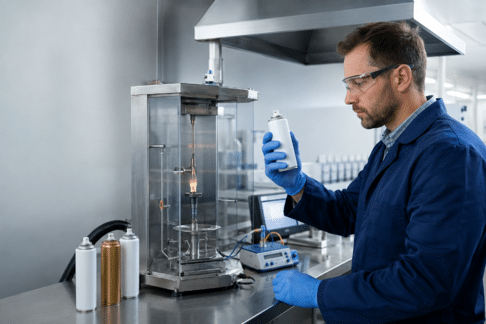
Aerosol Testing Services: Flammability, UN/DOT Classification and Safe Handling
Understand the conditions that lead to gas and vapor explosions, common industrial scenarios, and how facilities can reduce the risk.
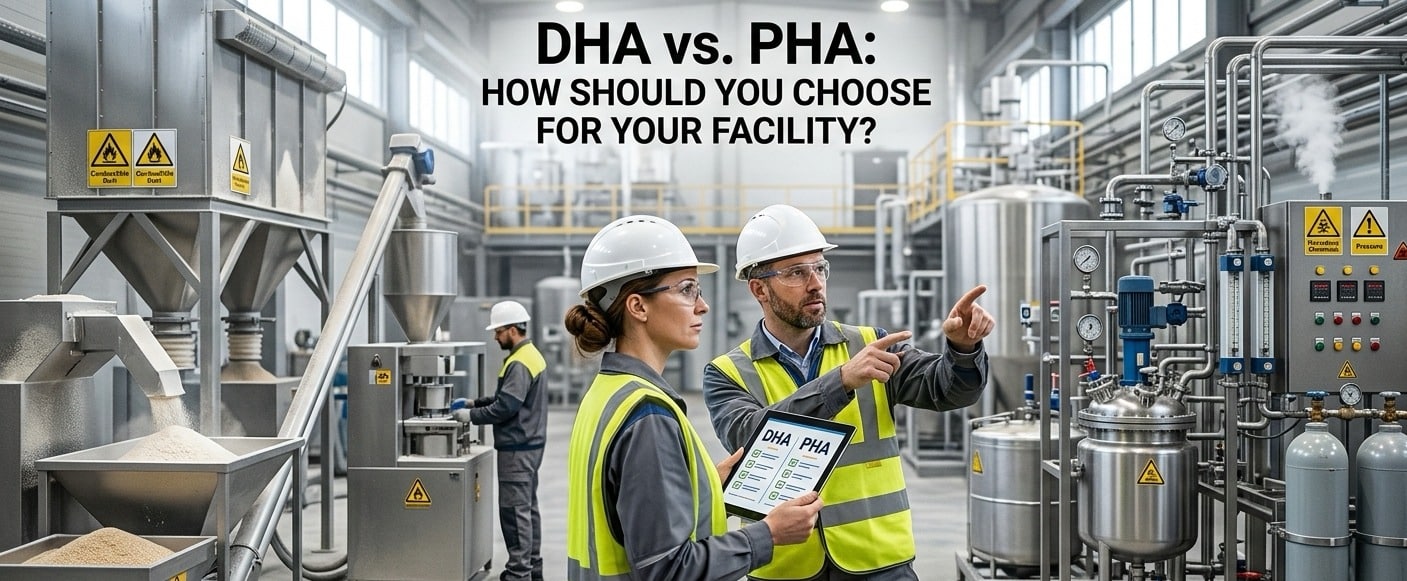
DHA vs. PHA: How Should You Choose for Your Facility?
Understand the conditions that lead to gas and vapor explosions, common industrial scenarios, and how facilities can reduce the risk.

The 0.1% Mistake: How Trace Impurities Trigger Mass Thermal Runaway
Understand the conditions that lead to gas and vapor explosions, common industrial scenarios, and how facilities can reduce the risk.

Understanding the Hidden Dangers of Static Electricity in Plastic Containers and Liners
Understand the conditions that lead to gas and vapor explosions, common industrial scenarios, and how facilities can reduce the risk.
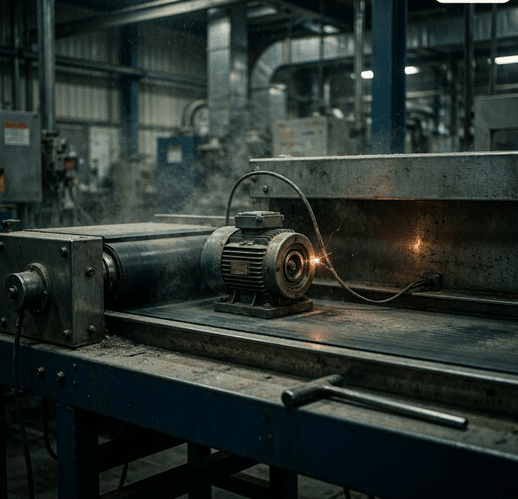
Invisible, Silent, and Costly: The Real Risk of Skipping Static Control
Understand the conditions that lead to gas and vapor explosions, common industrial scenarios, and how facilities can reduce the risk.

Invisible, Silent, and Costly: The Real Risk of Skipping Static Control
Understand the conditions that lead to gas and vapor explosions, common industrial scenarios, and how facilities can reduce the risk.

The Invisible Shield: Why Chemical Reaction Hazard Assessment is Your Ultimate Competitive Advantage
Understand the conditions that lead to gas and vapor explosions, common industrial scenarios, and how facilities can reduce the risk.