

Table of Contents
- What does a combustible dust compliance audit check?
- 1. Is your Dust Hazard Analysis current and complete?
- 2. Do you have dust test data for your actual materials?
- 3. Is dust accumulation under control?
- 4. Are ignition sources identified and controlled?
- 5. Is explosion protection in place and maintained?
- 6. Are your people trained and your changes managed?
- What do OSHA inspectors look for under the Combustible Dust NEP?
- What should you do with the gaps you find?
- Frequently Asked Questions
- How Prime Process Safety Center Can Help
Combustible Dust Compliance Audit Checklist
Six areas to review before an OSHA Inspector or insurer audit, with a checklist for each.

Executive Summary: A combustible dust compliance audit checks whether your facility can prove it knows its dust hazards and controls them. Auditors look for six things: a current Dust Hazard Analysis (DHA), dust test data, housekeeping records, ignition source controls, explosion protection, and trained people. Use the combustible dust compliance checklist below to find gaps before an OSHA inspector or insurer does.
What Does A Combustible Dust Compliance Audit Check?
A combustible dust audit checks whether your facility meets NFPA 660 and the hazards targeted by OSHA’s Combustible Dust National Emphasis Program (NEP). It looks at documents, plant conditions and people. The core question is simple: can you show, on paper and on the floor, that dust hazards are identified, assessed and controlled?
NFPA 660, Standard for Combustible Dusts and Particulate Solids (2025 edition), replaced NFPA 61, 484, 652, 654, 655 and 664 in December 2024. If your program still references those older standards, an auditor may ask how you have transitioned. OSHA revised its Combustible Dust NEP (Directive CPL 03-00-008) in January 2023, so inspections continue to target facilities that handle combustible dust.
Work through the six areas below. Any “no” or “not sure” is a gap to close.

1. Is Your Dust Hazard Analysis Current And Complete?
The DHA is the first document most auditors ask for. Under NFPA 660, a facility that handles combustible dust needs a dust hazard analysis, and it must be reviewed and updated at least every five years.
- A written DHA exists for every process and area that handles combustible dust
- The DHA is less than five years old, or has been reviewed and updated
- It was updated after process changes, new materials or new equipment
- It was led by a qualified person, with the team members documented
- Every recommendation has an owner, a due date and a closure record
- It references NFPA 660 (or documents the transition from NFPA 652 and related standards)
An old DHA with open recommendations is one of the most common audit findings. Closing those items often matters more than the analysis itself.
2. Do You Have Dust Test Data For Your Actual Materials?
An auditor will ask how you know your dust is combustible and how severe an explosion could be. A Safety Data Sheet alone rarely answers that, because SDS data may not match your particle size, moisture or blend.
- Representative samples were tested, including the finest fractions collected in dust collectors
- Results include explosibility screening and, where needed, Kst and Pmax
- Ignition sensitivity data (MIE, MIT, layer ignition temperature) supports your ignition source controls
- Test data is used in the DHA and in explosion protection design
- Materials were retested after a change in supplier, process or particle size
Without combustible dust testing, a DHA rests on assumptions. That is hard to defend in an audit and risky when sizing vents or suppression systems. See how combustible dust testing supports a defensible DHA.
3. Is Dust Accumulation Under Control?
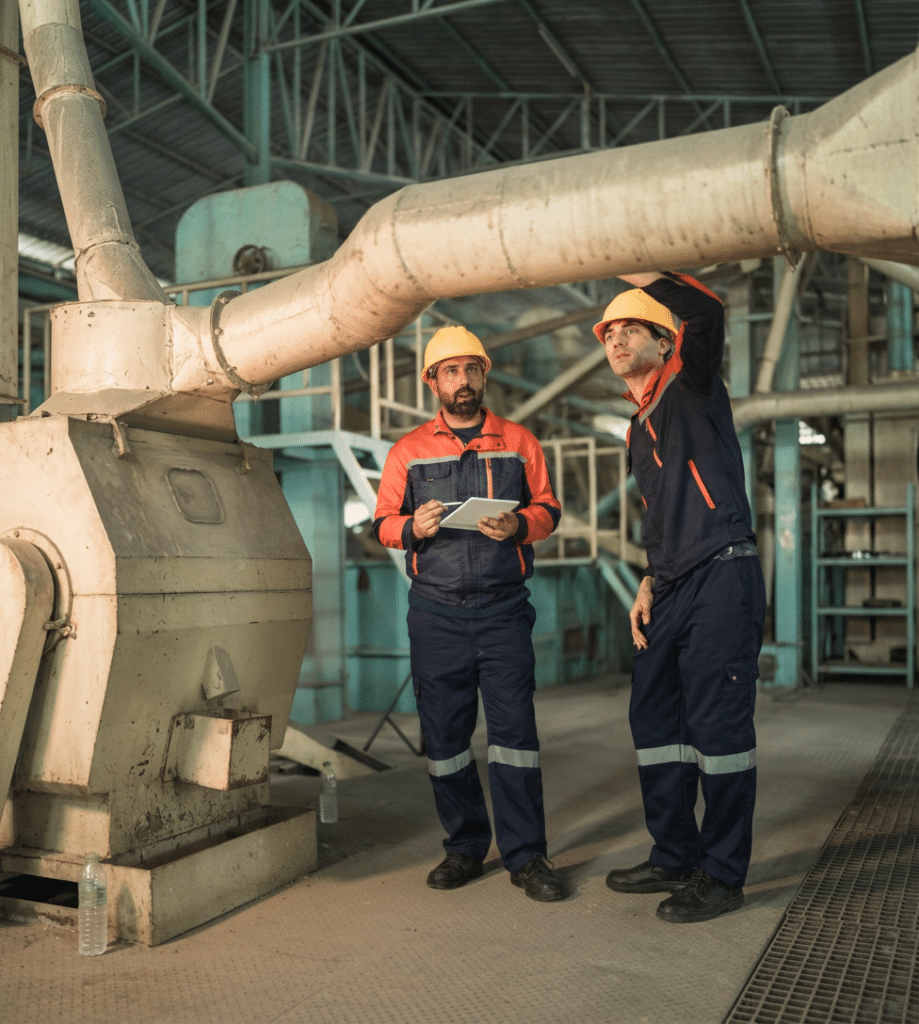
Housekeeping is the most visible part of any audit. Inspectors look up at beams, ductwork, light fixtures and the tops of equipment, not only at the floor.
- A written housekeeping program with frequencies set by area
- Cleaning records that show the schedule is followed
- Cleaning methods that do not create dust clouds (no compressed air blowdown without controls)
- Vacuums rated for combustible dust where they are used
- Dust leaks from equipment are found and repaired, not just cleaned up
- Hidden areas (above ceilings, inside enclosures) are inspected
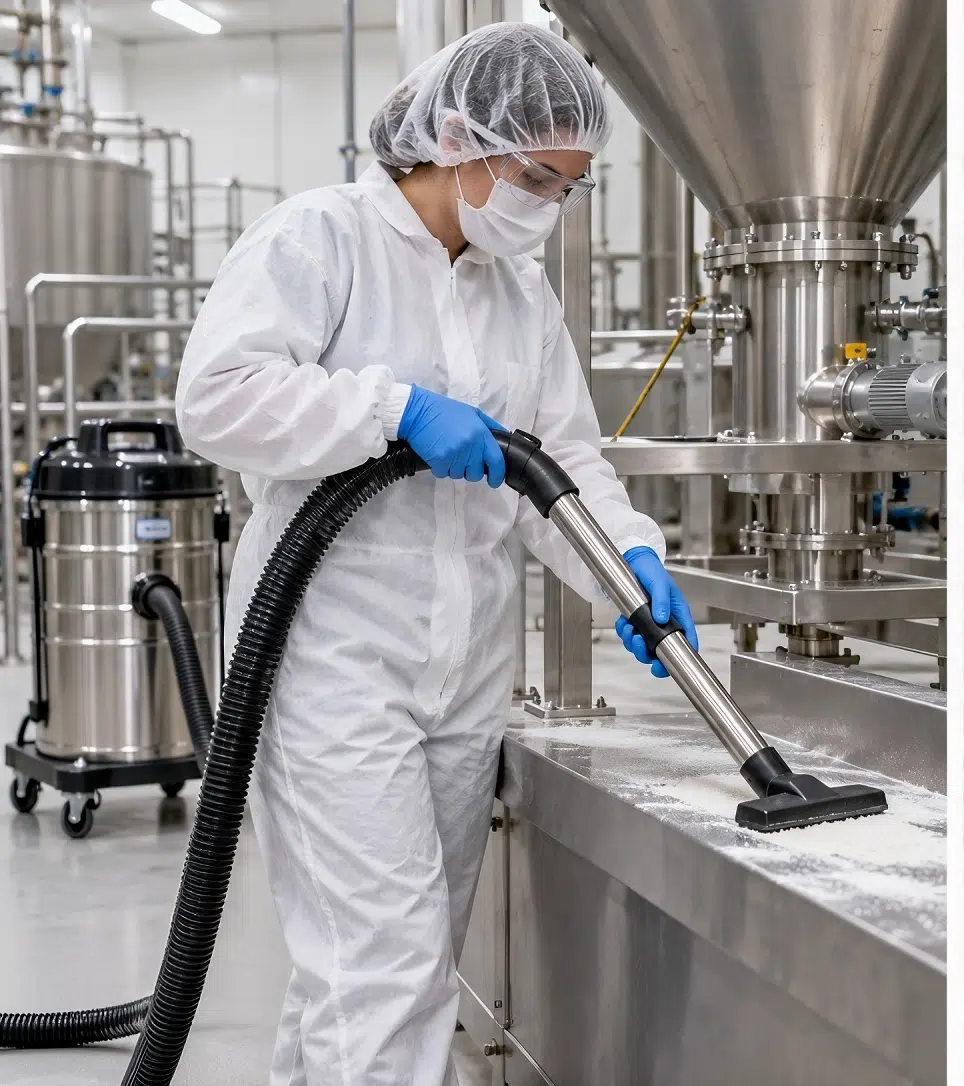
Housekeeping prevents secondary explosions, which often cause more damage than the first event. Learn more in our guide to combustible dust housekeeping.
4. Are Ignition Sources Identified And Controlled?
A dust explosion needs an ignition source. The audit checks that you have found them and that controls match your dust’s ignition sensitivity.
- Electrical equipment in dusty areas is suitable for the area classification
- Hot work permits include dust cleanup and isolation before work starts
- Equipment, ducts and containers are bonded and grounded where static is a risk
- Tramp metal, overheated bearings and friction sources are controlled
- Powered industrial trucks are rated for the area they work in
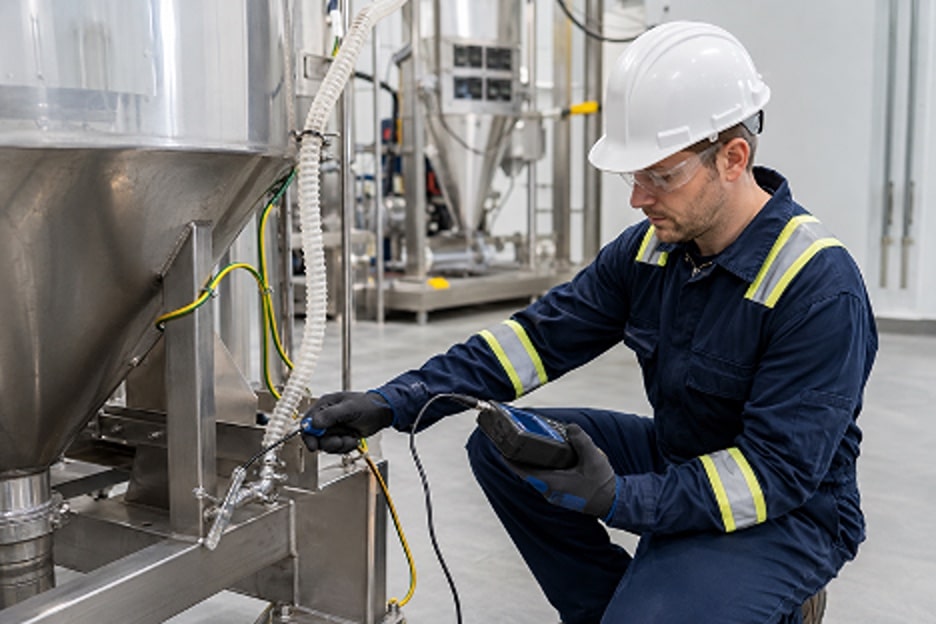
Low MIE dusts may need tighter static controls than the plant’s general practices provide. See management of ignition sources.
5. Is Explosion Protection In Place And Maintained?
Where a DHA finds an explosion hazard inside equipment, protection must be designed, installed and maintained.
- Dust collectors, silos and other enclosures have protection where the DHA requires it (venting, suppression, containment or inerting)
- Isolation is in place to stop an explosion spreading between connected equipment
- Vent discharges point to safe areas, away from people and walkways
- Design is based on your dust’s test data (Kst, Pmax)
- Inspection and maintenance records are current
Protection that was correctly sized ten years ago may not fit today’s process or material. See explosion protection strategies.
6. Are Your People Trained And Your Changes Managed?
Programs fail when people do not know the hazards or when changes bypass review.
- Employees and contractors receive combustible dust hazard awareness training
- Training records are current
- Management of change (MOC) reviews dust hazards before process or equipment changes
- Contractors are briefed on dust hazards before work
- Incidents and near misses involving dust are investigated
What Do OSHA Inspectors Look For Under The Combustible Dust NEP?
Under the NEP, inspectors walk the facility and review records. Common citations involve housekeeping (29 CFR 1910.22), hazard communication for combustible dust (1910.1200), electrical equipment in hazardous locations (1910.307), powered industrial trucks (1910.178), and the General Duty Clause for recognized hazards. NFPA standards are often used as evidence of recognized good practice.
What Should You Do With The Gaps You Find?
Rank gaps by risk, not by how easy they are to fix. A missing DHA, missing test data and unprotected dust collectors usually come first, because other controls depend on them. Housekeeping and training gaps can often be fixed quickly in parallel.
Frequently Asked Questions
How often should a combustible dust audit be done?
Many facilities run an internal audit every year, with a full DHA review at least every five years as NFPA 660 requires. Audit sooner after a process change, a new material, an incident, or before an insurer visit.
Is an SDS enough to prove a dust is not combustible?
Usually not. An SDS may not reflect your particle size, moisture or blend. Testing representative samples from your process gives defensible data for the DHA and for explosion protection design.
Does NFPA 660 replace NFPA 652?
Yes. NFPA 660 (2025 edition) consolidated NFPA 652 with NFPA 61, 484, 654, 655 and 664 into one standard. Existing DHAs done under NFPA 652 should be reviewed against NFPA 660 at their next update.
Who can perform a Dust Hazard Analysis?
A DHA must be led by a qualified person with knowledge of combustible dust hazards, supported by people who know the process and equipment. Many facilities use an outside specialist to lead it and keep the review independent.
What is the most common combustible dust audit finding?
Common findings include an outdated or missing DHA, open DHA recommendations, no test data for the actual materials, and dust accumulation on elevated surfaces.
How Prime Process Safety Center Can Help
Prime Process Safety Center (PPSC) helps facilities close the gaps this combustible dust compliance checklist uncovers, from combustible dust testing of your actual materials to a facility-specific Dust Hazard Analysis aligned with NFPA 660. Our work is led by Dr. Emmanuel Addai, who has completed 300+ fire and explosion hazard assessments, PHAs and incident investigations across the US, Canada and Mexico.
Found gaps? Request a quote for combustible dust testing or a DHA, and we’ll help you close them before your next audit. Call (346) 462-3838 or email info@primeprocesssafety.com.


Related Blogs

Combustible Dust Compliance Audit Checklist
Understand the conditions that lead to gas and vapor explosions, common industrial scenarios, and how facilities can reduce the risk.
Combustible Dust Housekeeping: How to Build a Program That Prevents Secondary Explosions
Understand the conditions that lead to gas and vapor explosions, common industrial scenarios, and how facilities can reduce the risk.

Basket Self-Heating and Scale-Up Testing
Understand the conditions that lead to gas and vapor explosions, common industrial scenarios, and how facilities can reduce the risk.

How to Prevent Dust Explosions and Meet NFPA 660 Requirements
Understand the conditions that lead to gas and vapor explosions, common industrial scenarios, and how facilities can reduce the risk.

Flammability Testing Services
Understand the conditions that lead to gas and vapor explosions, common industrial scenarios, and how facilities can reduce the risk.

Building a Combustible Dust Safety Program
Understand the conditions that lead to gas and vapor explosions, common industrial scenarios, and how facilities can reduce the risk.

ATEX vs IECEx Hazardous Area Classification
Understand the conditions that lead to gas and vapor explosions, common industrial scenarios, and how facilities can reduce the risk.
Protect Against Electrostatic Hazards
Understand the conditions that lead to gas and vapor explosions, common industrial scenarios, and how facilities can reduce the risk.
Soil Resistivity Information and Field Testing
Understand the conditions that lead to gas and vapor explosions, common industrial scenarios, and how facilities can reduce the risk.

SDS Creation and Physical Property Testing
Understand the conditions that lead to gas and vapor explosions, common industrial scenarios, and how facilities can reduce the risk.

UN/DOT HAZARDOUS MATERIALS TESTING
Understand the conditions that lead to gas and vapor explosions, common industrial scenarios, and how facilities can reduce the risk.

Thermal Stability Testing
Understand the conditions that lead to gas and vapor explosions, common industrial scenarios, and how facilities can reduce the risk.