

ASTM Testing Services: Turning Material Properties into Defensible Safety Decisions
Reliable material data for safer design, handling, storage, transport, and regulatory decision-making.

AT A GLANCE
Prime Process Safety Center provides standardized process-safety and material testing through an ISO/IEC 17025:2017 accredited laboratory. Confirm the current accreditation scope and method availability when requesting a quotation.
Process safety decisions are only as reliable as the data behind them. A flash point may influence storage and transportation classifications. A minimum ignition energy can determine whether ordinary electrostatic discharges must be treated as credible ignition sources. Dust explosion severity data can become a design input for explosion venting or suppression. Thermal-analysis results may reveal decomposition behavior that must be considered before a process is scaled up.
At Prime Process Safety Center, standardized testing is integrated with practical process-safety experience. The objective is not simply to produce a number, but to help clients understand what the result means for their materials, equipment, workers, and operations.
What Is ASTM Testing?
ASTM testing uses published consensus methods developed by ASTM International to evaluate the properties, performance, and hazards of materials and products under defined laboratory conditions. A method typically establishes sample preparation requirements, apparatus configuration, environmental conditions, test steps, calculations, reporting conventions, and quality-control expectations.
Because the procedure is standardized, qualified laboratories can generate results that are more repeatable, comparable, and technically defensible than informal screening alone. ASTM data may be used for product development, material selection, process design, hazard assessment, transportation classification, Safety Data Sheet development, quality assurance, incident investigation, and regulatory support.
Why Standardized Testing Matters
- Hazard identification: Determine whether a substance can ignite, explode, self-heat, decompose, or accumulate hazardous static charge.
- Engineering design: Supply inputs for inerting, ventilation, explosion protection, temperature limits, electrical classification, grounding, bonding, and relief-system evaluation.
- Regulatory and classification support: Provide data relevant to OSHA hazard communication, DOT/UN transportation, fire-code, insurance, and customer requirements.
- Product and process development: Compare formulations, investigate impurities, assess changes, and establish safer operating or storage conditions.
- Due diligence and incident prevention: Replace assumptions or literature values with representative data for the actual material and condition of use.
Core ASTM Testing Capabilities
1. Aerosol Flammability
Aerosol products can present different hazards from their base liquids because propellant composition, spray characteristics, packaging, and discharge geometry influence flammability. ASTM D3065 testing can support evaluation of flame projection and other aerosol-product characteristics. Results may be used with applicable transportation and product-classification requirements.
Related service: UN/DOT Testing & Classification
2. Chemical and Physical Properties
Physical-property measurements establish foundational data needed to characterize a material. Depending on the product and decision, the program may include physical state, vapor pressure, electrical conductivity, dielectric properties, thermal conductivity, or determination of whether a material behaves as a liquid or solid. These values can influence equipment selection, containment, transport, and hazard communication.
Explore: Testing Capabilities
3. Chemical Reactivity and Thermal Stability
Reactive chemicals can release heat, generate gas, pressurize equipment, or undergo accelerating decomposition. ASTM E537 provides a framework for assessing thermal stability using thermal-analysis techniques, while ASTM E771 addresses spontaneous-heating tendency. Thermogravimetric analysis, calorimetry, and complementary methods may be combined when a single screening result cannot answer the process question.
Learn more: Reactive Chemical Testing Services
Combustible Dust Test Data
From hazard confirmation to engineering controls
Ignitability
- MIE: spark sensitivity
- MIT cloud and dust layer
Explosibility
- Kst and Pmax severity
- MEC concentration threshold
Application
- Ignition-source control
- Protection system design
4. Combustible Dust Hazards
A powder that burns may also form an explosible dust cloud, but no single test completely characterizes the hazard. ASTM E1226 measures maximum explosion pressure and the maximum rate of pressure rise used to calculate Kst. ASTM E1515 determines minimum explosible concentration. ASTM E2019 evaluates minimum ignition energy, while ASTM E1491 and ASTM E2021 address hot-surface ignition of dust clouds and layers. The selected tests should match the material, particle size, moisture content, and intended process conditions.
Related resources: Combustible Dust Testing | Dust Hazard Analysis | Minimum Ignition Energy Testing
Liquid, Gas & Vapor Flammability
Standardized data for classification and safe operation
Flash / Fire Point
- Closed- or open-cup method
- Material classification
Flammability Limits
- LFL and UFL boundaries
- Temperature / pressure effects
Autoignition
- Ignition without a spark
- Hot-surface precautions
5. Flash Point, Fire Point, Flammable Limits, and Autoignition
Flash point is the lowest test temperature at which a liquid produces sufficient vapor to ignite under the specified apparatus and procedure. Closed-cup methods such as ASTM D56, D93, and D3278 generally represent more confined conditions, while ASTM D92 uses the Cleveland open-cup apparatus and can determine both flash and fire points. ASTM E681 and E918 evaluate flammability limits, ASTM E659 addresses autoignition temperature, and ASTM E2079 determines limiting oxygen concentration for gases and vapors.
Related services: Flash Point Testing | Gas & Vapor Flammability Testing
Electrostatic Property Testing
Understand generation, accumulation and discharge
Generate
- Flow and material contact
- Chargeability testing
Accumulate
- Conductivity / resistivity
- Charge relaxation time
Discharge
- Spark and brush discharge
- Grounding and bonding basis
6. Electrostatic Properties
Electrostatic testing helps determine whether powders, liquids, films, liners, garments, fuels, and other materials can generate or retain charge. Relevant methods address resistance, conductance, resistivity, dielectric behavior, conductivity, and static electrification. Results support grounding and bonding strategies, material selection, packaging evaluation, and ignition-source assessment. Test conditions—especially humidity, temperature, sample conditioning, geometry, and electrode configuration—must be controlled because they can materially affect results.
Related service: Electrostatics Testing | Guide to Electrostatic Testing
How to Select the Right ASTM Method
The method number should not be selected only because it appears on a customer specification or a historical report. The laboratory and client should first define the decision the data must support. Important questions include:
- What material, formulation, batch, and physical form will be tested?
- What are the anticipated temperature, pressure, oxygen level, humidity, particle size, and concentration?
- Is the objective screening, classification, design, troubleshooting, comparison, or compliance?
- Does a product specification require a particular apparatus, specimen preparation, or reporting format?
- Are non-standard process conditions needed to make the test representative?
- Is the method included within the laboratory’s current accredited scope, or will it be reported as a non-accredited service?
IMPORTANT
ISO/IEC 17025 accreditation applies to the laboratory’s defined scope—not automatically to every test the laboratory may be capable of performing. Request confirmation of the current accredited scope for the specific method and matrix.
Frequently Requested ASTM Methods
The following methods are commonly requested for material-property and process-safety investigations. Method editions, titles, status, scope, sample requirements, and laboratory availability should be confirmed at the time of quotation.
Flash Point and Liquid Burning
| ASTM Method | Test Method / Property |
|---|---|
| ASTM D56 | Flash Point by Tag Closed Cup Tester |
| ASTM D92 | Flash and Fire Points by Cleveland Open Cup |
| ASTM D93 | Flash Point by Pensky-Martens Closed Cup Tester |
| ASTM D3278 | Flash Point of Liquids by Small Scale Closed-Cup Apparatus |
| ASTM D4206 | Sustained Burning of Liquid Mixtures Using the Small Scale Open-Cup Apparatus |
Electrical and Electrostatic Properties
| ASTM Method | Test Method / Property |
|---|---|
| ASTM D257 | DC Resistance or Conductance of Insulating Materials |
| ASTM D924 | Dissipation Factor and Relative Permittivity of Electrical Insulating Liquids |
| ASTM D1169 | Specific Resistance (Resistivity) of Electrical Insulating Liquids |
| ASTM D1816 | Dielectric Breakdown Voltage of Petroleum-Origin Insulating Oils Using VDE Electrodes |
| ASTM D2624 | Electrical Conductivity of Aviation and Distillate Fuels |
| ASTM D4308 | Electrical Conductivity of Liquid Hydrocarbons by Precision Meter |
| ASTM D4470 | Static Electrification |
| ASTM D4496 | DC Resistance or Conductance of Moderately Conductive Materials |
| ASTM D4865 | Generation of Static Electricity in Petroleum Fuel Systems |
| ASTM E1549M | ESD-controlled garments used in cleanrooms and controlled spacecraft environments |
Physical and Thermal Properties
| ASTM Method | Test Method / Property |
|---|---|
| ASTM D2717 | Thermal Conductivity of Liquids |
| ASTM D2879 | Vapor Pressure–Temperature Relationship and Initial Decomposition Temperature by Isoteniscope |
| ASTM D4359 | Determining Whether a Material Is a Liquid or a Solid |
| ASTM E537 | Assessing Thermal Stability of Chemicals by Thermal Analysis |
| ASTM E771 | Spontaneous Heating Tendency of Materials |
| ASTM E1194 | Vapor Pressure |
| ASTM E2105 | General Techniques of TGA Coupled with Infrared Analysis (TGA/IR) |
Aerosols, Plastics, and Fire Investigation
| ASTM Method | Test Method / Property |
|---|---|
| ASTM D1929 | Determining Ignition Temperature of Plastics |
| ASTM D3065 | Flammability of Aerosol Products |
| ASTM E1618 | Ignitable Liquid Residues in Fire-Debris Extracts by GC-MS |
Gas and Vapor Flammability
| ASTM Method | Test Method / Property |
|---|---|
| ASTM E582 | Minimum Ignition Energy and Quenching Distance in Gaseous Mixtures |
| ASTM E659 | Autoignition Temperature of Chemicals |
| ASTM E681 | Concentration Limits of Flammability of Chemicals |
| ASTM E918 | Flammability Limits at Elevated Temperature and Pressure |
| ASTM E1232 | Temperature Limit of Flammability of Chemicals |
| ASTM E2079 | Limiting Oxygen (Oxidant) Concentration in Gases and Vapors |
| ASTM G72 | Autogenous Ignition Temperature in High-Pressure Oxygen-Enriched Environments |
Combustible Dust
| ASTM Method | Test Method / Property |
|---|---|
| ASTM E1226 | Pressure and Rate of Pressure Rise for Combustible Dusts |
| ASTM E1491 | Minimum Autoignition Temperature of Dust Clouds |
| ASTM E1515 | Minimum Explosible Concentration of Combustible Dusts |
| ASTM E2019 | Minimum Ignition Energy of a Dust Cloud in Air |
| ASTM E2021 | Hot-Surface Ignition Temperature of Dust Layers |
What to Expect from an ASTM Testing Project
- Define the decision: Clarify whether the result will support classification, design, compliance, product development, hazard analysis, or troubleshooting.
- Review the material and process: Discuss composition, physical form, known hazards, anticipated operating conditions, sample variability, and handling restrictions.
- Select the method and test conditions: Identify the applicable ASTM procedure, method edition, apparatus, conditioning, replicates, acceptance criteria, and any justified deviations.
- Submit a representative sample: Provide a sample that reflects the material used in practice, together with an SDS, chain-of-custody information, and any special handling instructions.
- Conduct testing and quality checks: Qualified personnel use calibrated or verified equipment, document conditions, review data quality, and address anomalies.
- Receive and interpret the report: The report identifies the sample, method, conditions, results, observations, and relevant limitations. Where requested, process-safety specialists can connect the data to practical risk controls.
What the Final Report Should Communicate
- Unique sample identification and condition as received
- Test method, edition, apparatus, and any deviations
- Sample preparation and conditioning
- Environmental and operating conditions relevant to the result
- Replicate data, calculations, acceptance criteria, and reported result
- Observations such as ignition behavior, decomposition, residue, pressure response, or uncertainty
- Limitations and appropriate interpretation of the data
Industries That Use ASTM Testing
Standardized testing supports organizations across chemicals and petrochemicals, pharmaceuticals, food and agriculture, paints and coatings, plastics and polymers, batteries and energy storage, aerospace, automotive, electronics, metals and additive manufacturing, consumer products, oil and gas, warehousing, recycling, and waste management. The same method can serve different decisions in different industries; the key is connecting the test conditions to the real operating scenario.
Frequently Asked Questions About ASTM Testing
What is ASTM testing?
ASTM testing is laboratory or field evaluation performed using a published ASTM consensus standard. The standard defines the test apparatus, procedure, calculations, and reporting expectations for a specific material property or performance characteristic.
Why is ASTM testing important?
It replaces guesswork with standardized, reproducible data. Results can improve hazard identification, engineering design, product development, regulatory support, quality assurance, and communication across organizations.
What types of products can be tested?
Powders, dusts, liquids, gases, vapors, aerosols, fuels, insulating liquids, polymers, films, garments, and many other industrial or consumer materials may be evaluated, depending on the method and laboratory capability.
When should testing be conducted?
Testing is valuable before commercialization or scale-up, when introducing a new raw material or supplier, during Management of Change, when designing safeguards, when preparing transport or hazard classifications, after an incident, or when existing data are missing or unrepresentative.
Can ASTM testing support regulatory compliance?
Yes. ASTM results are frequently referenced by regulations, codes, permits, product specifications, customers, and consensus standards. Testing does not by itself guarantee compliance; the result must be applied within the relevant regulatory and engineering framework.
How do I know which method is appropriate?
Start with the decision to be made, the material form, and the expected process conditions. A laboratory specialist can then determine whether one ASTM method, a sequence of tests, or a complementary non-ASTM method is most appropriate.
What industries use ASTM testing services?
Chemical processing, pharmaceutical, food, aerospace, energy, electronics, automotive, manufacturing, metals, plastics, coatings, logistics, recycling, and many other sectors use standardized material data.
What information can testing provide?
Depending on the method, testing can quantify ignition sensitivity, explosion severity, flammability limits, flash point, fire point, autoignition temperature, vapor pressure, thermal stability, conductivity, resistivity, dielectric behavior, or physical state.
What happens after testing is completed?
Clients receive a technical report. The data may then be incorporated into a DHA, PHA, SDS, transportation classification, equipment specification, operating limit, ignition-control program, or further engineering study.
Why use a third-party laboratory?
An independent laboratory provides specialized equipment, trained personnel, documented quality controls, and objective reporting. Third-party data can also improve confidence among regulators, insurers, customers, and internal stakeholders.
Partner with Prime Process Safety Center
Selecting a test is only the beginning. The value comes from using representative samples, appropriate conditions, quality-controlled methods, and experienced interpretation. Prime Process Safety Center helps clients build focused testing programs that produce the data needed to make safer, more confident decisions.
REQUEST A QUOTE
Call (346) 462-3838 or email info@primeprocesssafety.com.
Please provide the material name, SDS, physical form, requested method (if known), project objective, sample quantity available, and required completion date.
Related Blogs
ASTM Testing Services
Understand the conditions that lead to gas and vapor explosions, common industrial scenarios, and how facilities can reduce the risk.
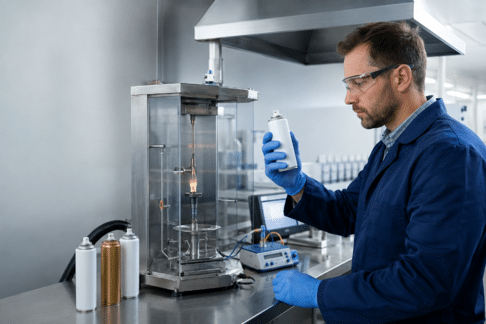
Aerosol Testing Services: Flammability, UN/DOT Classification and Safe Handling
Understand the conditions that lead to gas and vapor explosions, common industrial scenarios, and how facilities can reduce the risk.
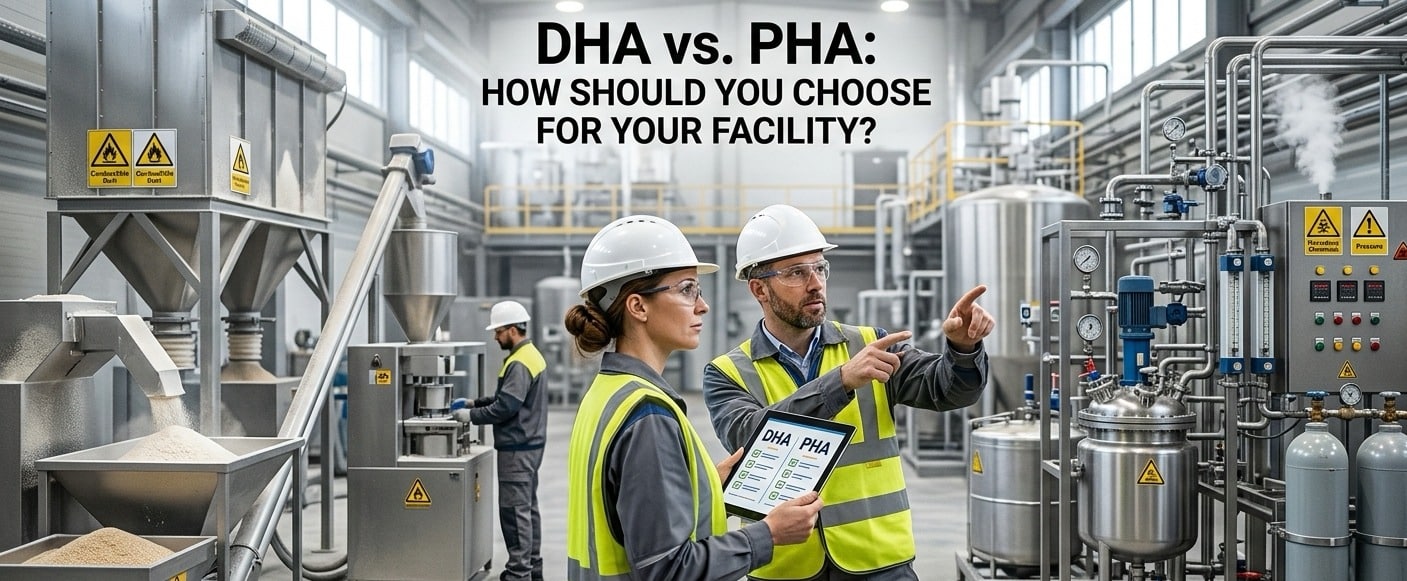
DHA vs. PHA: How Should You Choose for Your Facility?
Understand the conditions that lead to gas and vapor explosions, common industrial scenarios, and how facilities can reduce the risk.

The 0.1% Mistake: How Trace Impurities Trigger Mass Thermal Runaway
Understand the conditions that lead to gas and vapor explosions, common industrial scenarios, and how facilities can reduce the risk.

Understanding the Hidden Dangers of Static Electricity in Plastic Containers and Liners
Understand the conditions that lead to gas and vapor explosions, common industrial scenarios, and how facilities can reduce the risk.
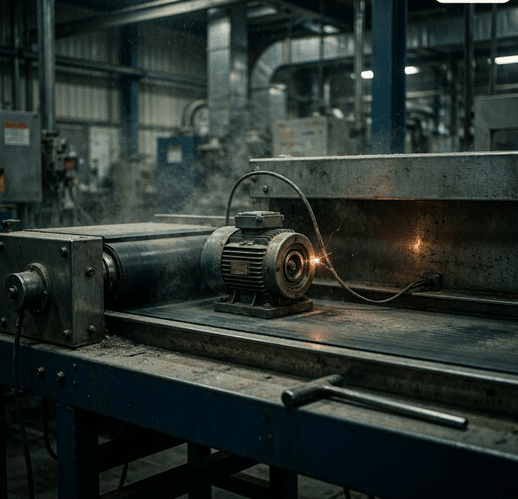
Invisible, Silent, and Costly: The Real Risk of Skipping Static Control
Understand the conditions that lead to gas and vapor explosions, common industrial scenarios, and how facilities can reduce the risk.

Invisible, Silent, and Costly: The Real Risk of Skipping Static Control
Understand the conditions that lead to gas and vapor explosions, common industrial scenarios, and how facilities can reduce the risk.

The Invisible Shield: Why Chemical Reaction Hazard Assessment is Your Ultimate Competitive Advantage
Understand the conditions that lead to gas and vapor explosions, common industrial scenarios, and how facilities can reduce the risk.

Common Gas and Vapor Explosion Scenarios in Industry
Understand the conditions that lead to gas and vapor explosions, common industrial scenarios, and how facilities can reduce the risk.
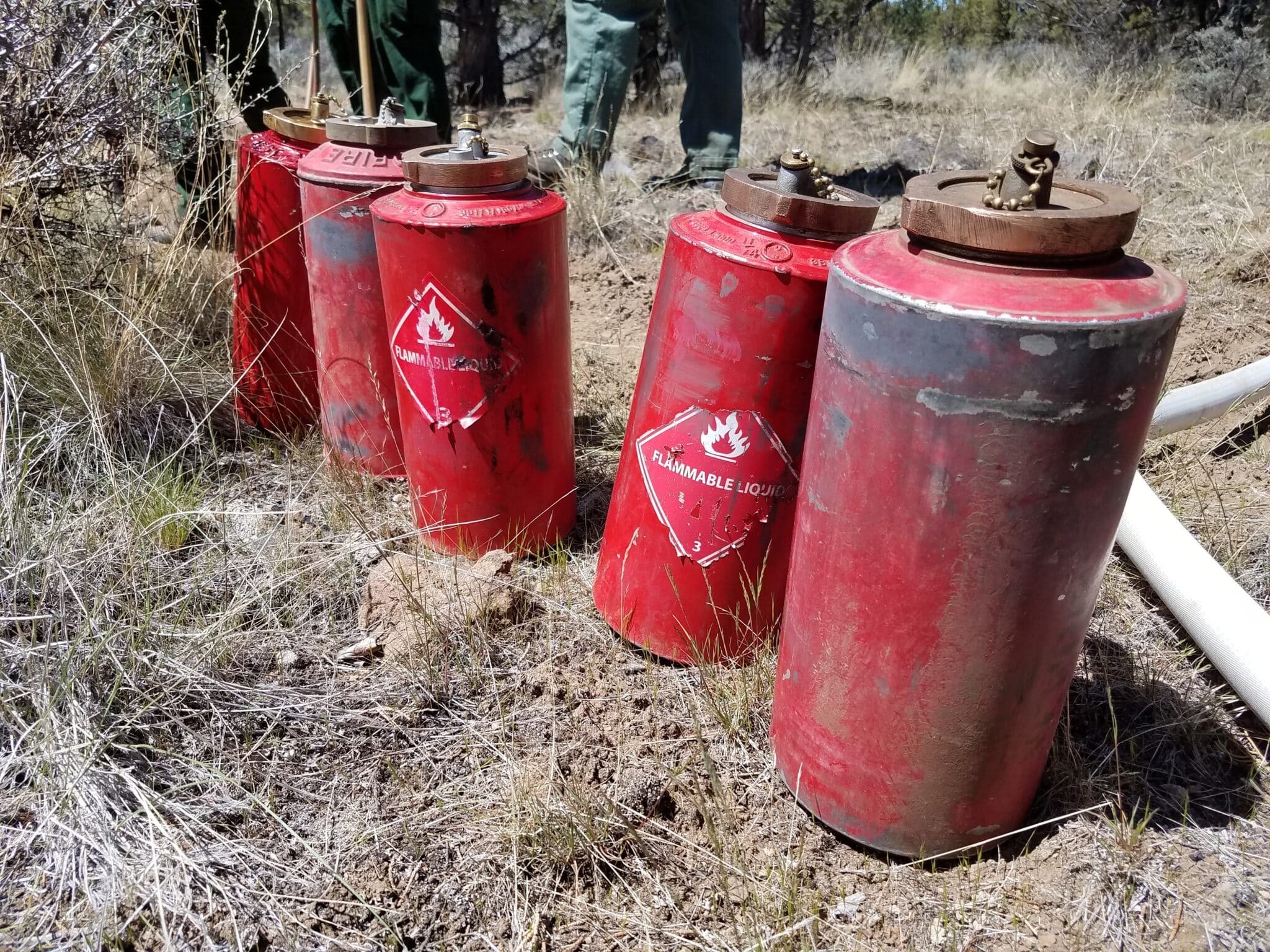
Flammable vs Combustible Liquids: What Sets Them Apart
Learn how flash point separates flammable and combustible liquids and what it means for safe storage and handling.

How Static Electricity Can Cause Fires in Your Facility
Learn how electrostatic charge buildup can create sparks that ignite flammable vapors, gases, and combustible dust in industrial operations.

Effective Process Hazard Analysis for Hazard Recognition
Learn how Process Hazard Analysis reduces industrial risk, meets OSHA requirements, and follows key process hazard analysis steps.